Our vessel construction
Hovercraft built in our own shop, from the mold up.
Vacuum infused composite hulls, heat welded skirts and stainless drive frames, all made by Amphibious Marine.
Infusion process
Vacuum resin infusion.
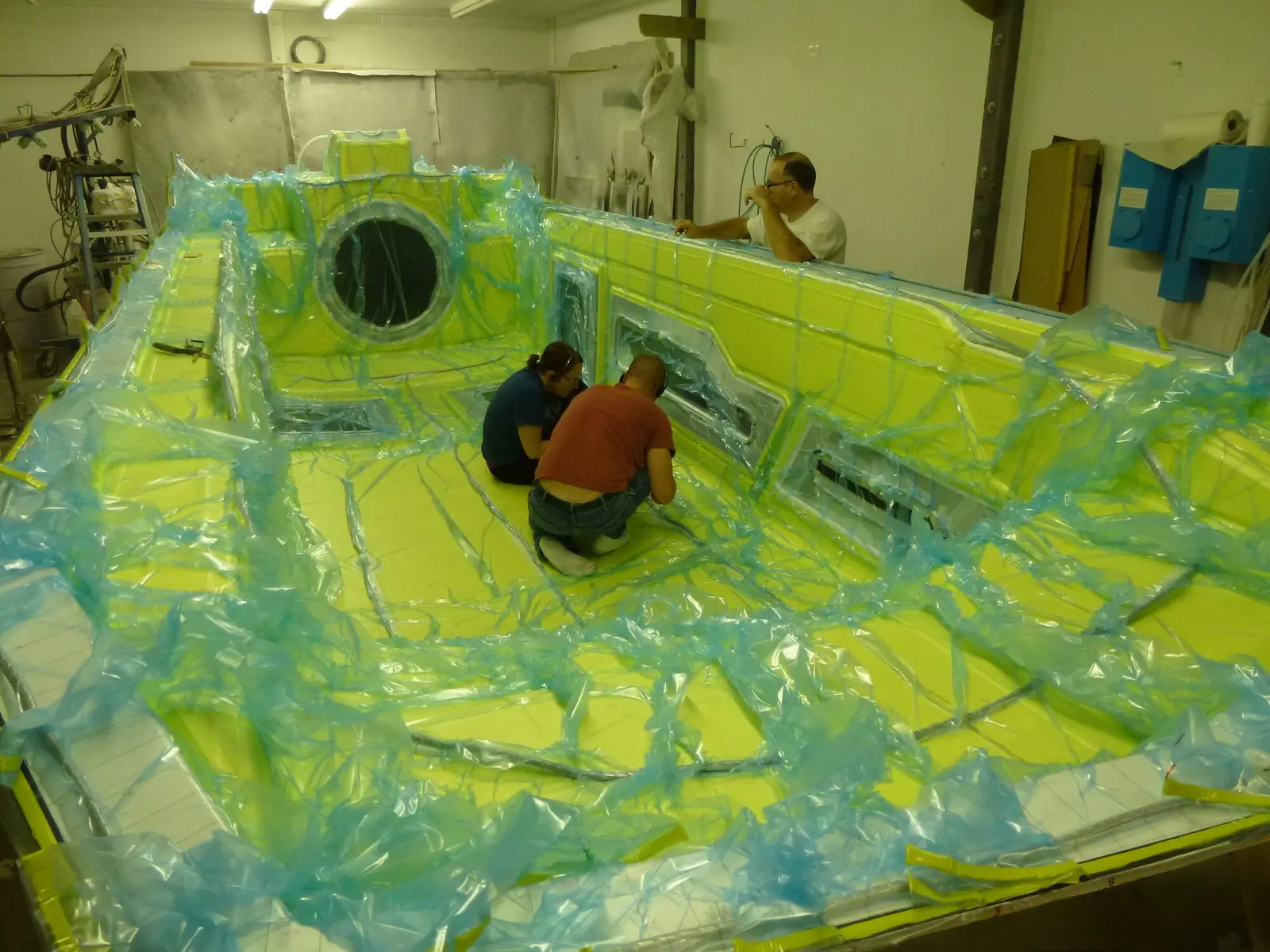
Every hull and deck is built by vacuum resin infusion. All the carbon, glass fiber and structural foam cores go into the mold dry. The vacuum bag goes on, the air comes out, and only then is the resin drawn in through ports in the bag.
That gives a better laminate, more design freedom with cored construction, and less weight. A small crew can lay up large, complex parts without racing the resin as it sets, and the resin and its smell stay under the bag. The result is a hull far lighter, stronger and more durable than welded aluminum.
An Explorer 24 deck being vacuum infused, as a time-lapse.
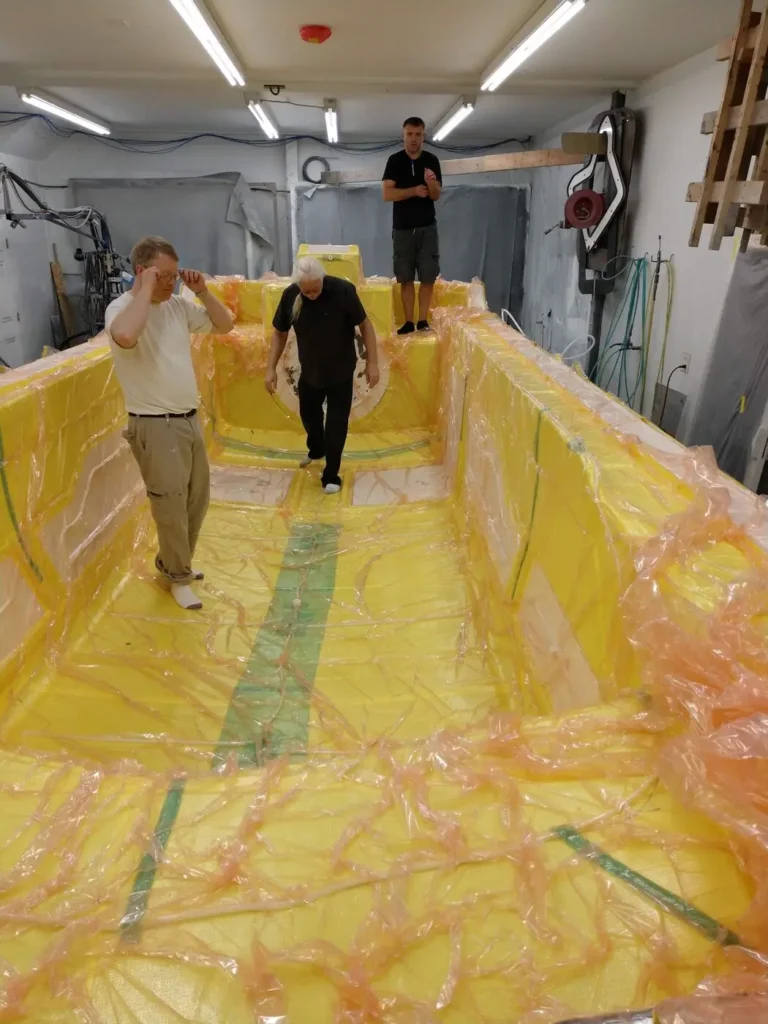
Laying up the hull mold.
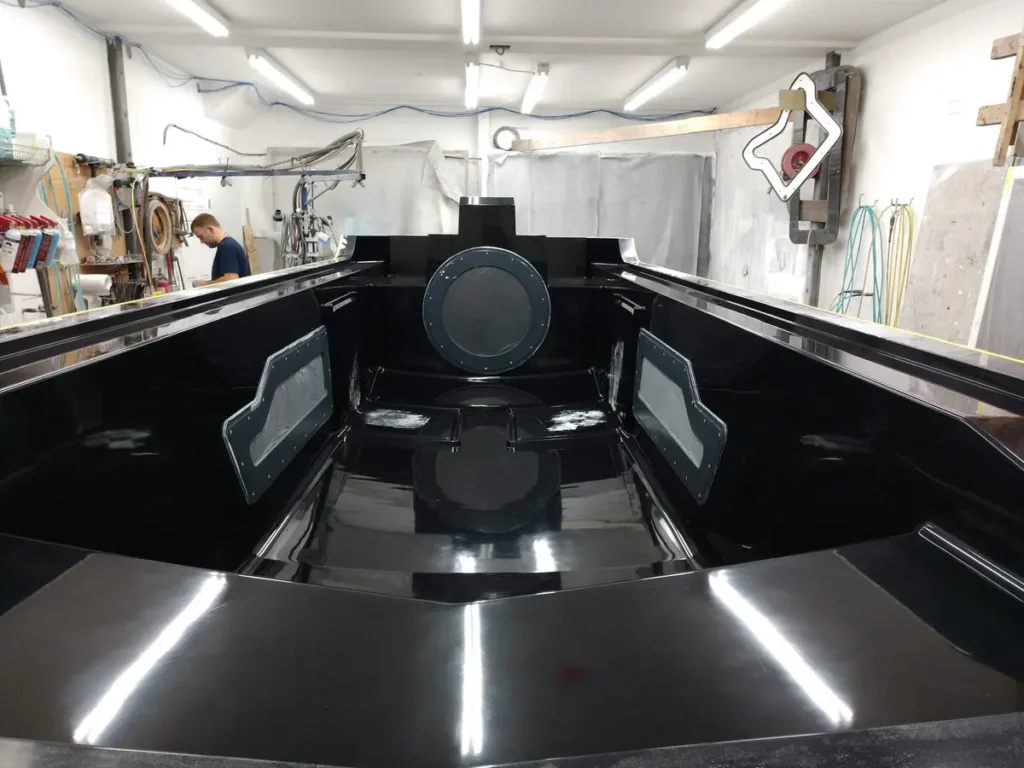
Deck mold loaded and ready to bag.
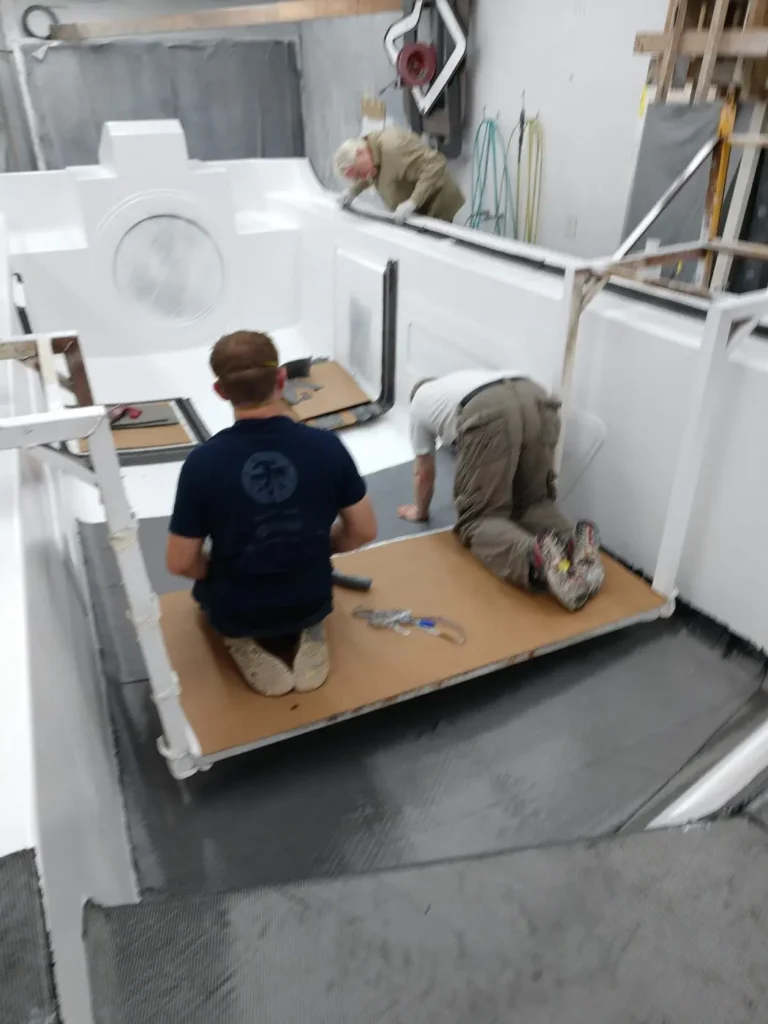
Placing core material.
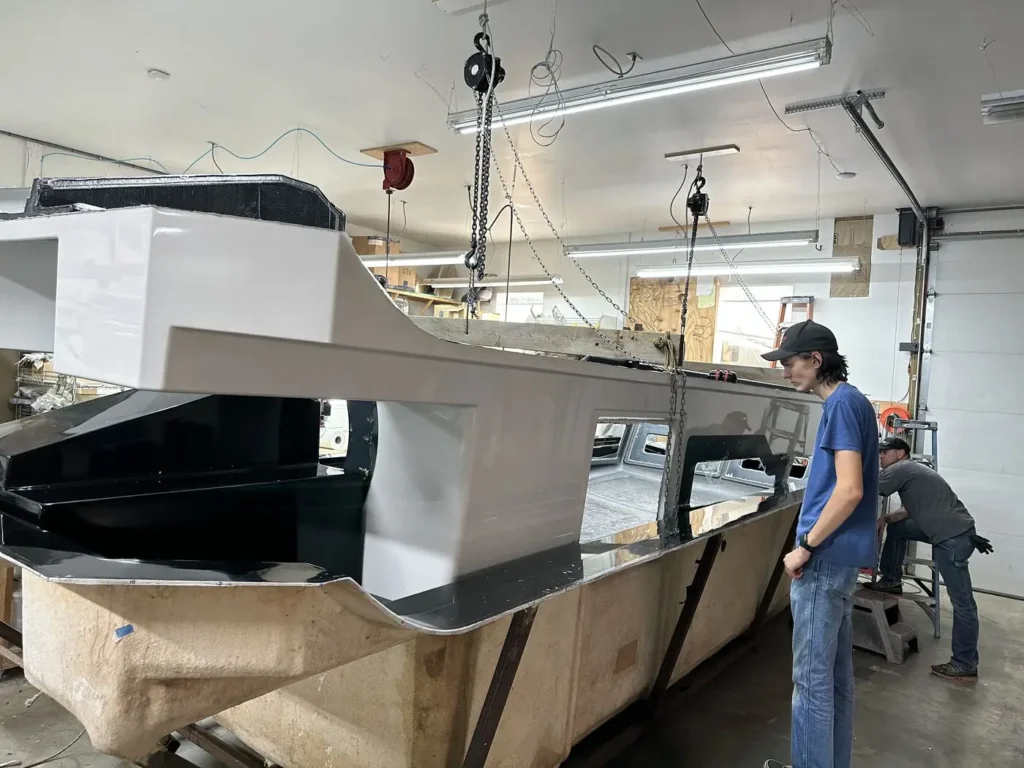
A finished cabin top being fitted.
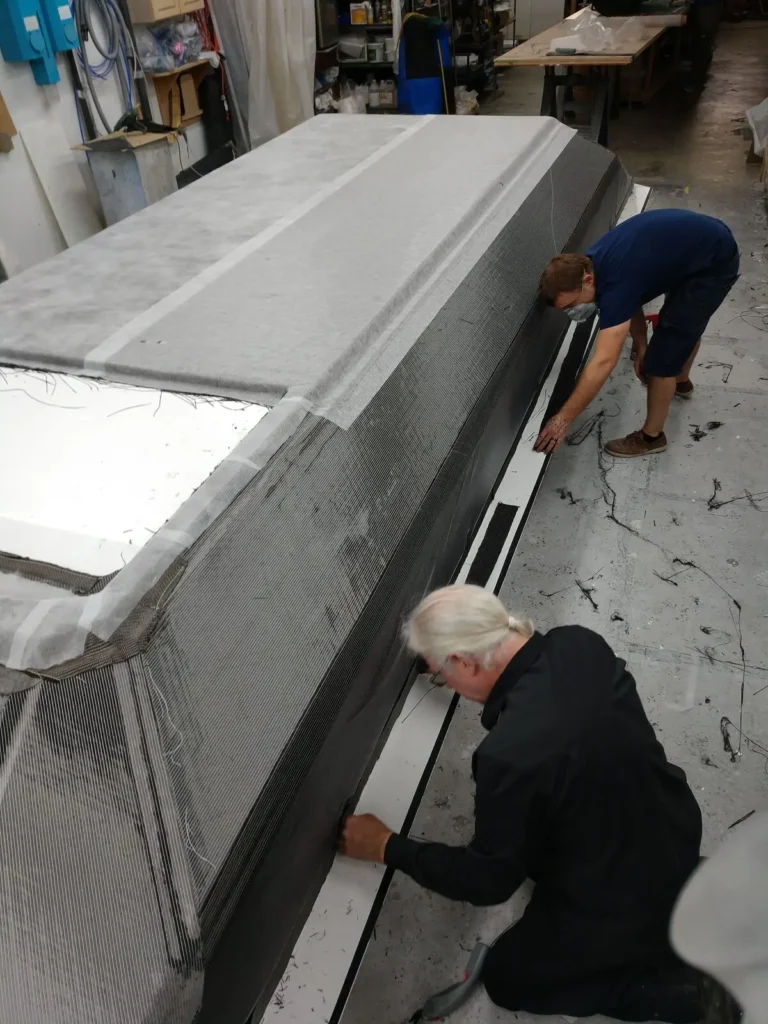
Laying carbon and glass fabric over a hull before infusion.
Our CNC router carving a plug, as a time-lapse.
CAD and CNC
Designed in 3D, cut on our own router.
The Explorer 22 TDi was our first craft designed in 3D CAD, using Rhino 3D and SolidWorks. In 2014 we added a 6 by 10 foot CNC router, so parts designed on screen are cut in the shop with more speed and precision.
CAD and CAM opened up shapes that were not possible before, like the airfoil shaped 54 inch duct we developed for the AM-14D. It was modeled from a NACA airfoil, machined as plugs on a five axis CNC, then molded in glass and carbon fiber.
Skirts
Cut, welded and fitted in house.
Our skirts are multi-compartment, with fore and aft partitions and large bag skirts on the sides and rear. We use commercial duty, dual weight urethane coated nylon and join it by hot air welding.
A skirt lasts about 1,500 to 2,000 hours. Heat bonded wear patches can extend that. Operators can carry a quick Kevlar thread repair kit for the field, and in the rare event of a large tear, make a permanent repair back at base with a hot air welder or adhesive. For heavy duty work over barnacle covered rock and oyster beds, we weld urethane reinforcements onto the wear areas with our Miller Weldmaster T300 hot air welder. Because we make them here, a replacement is a phone call.
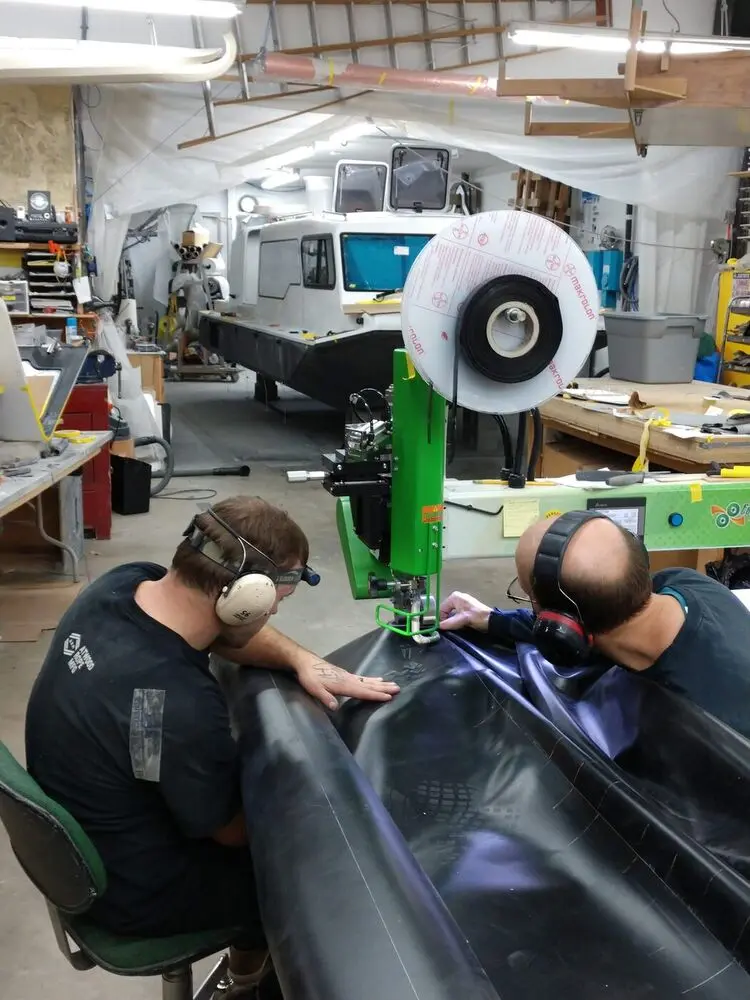
Hot air welding a skirt seam on our Miller Weldmaster T300.
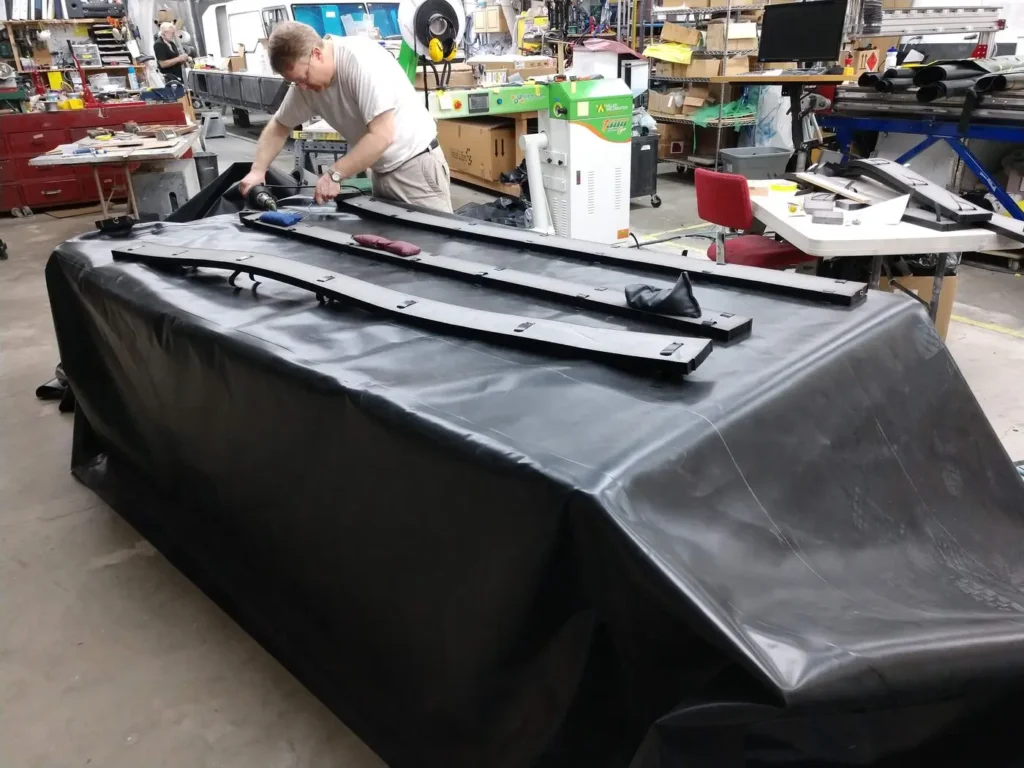
Fitting a skirt to the hull.
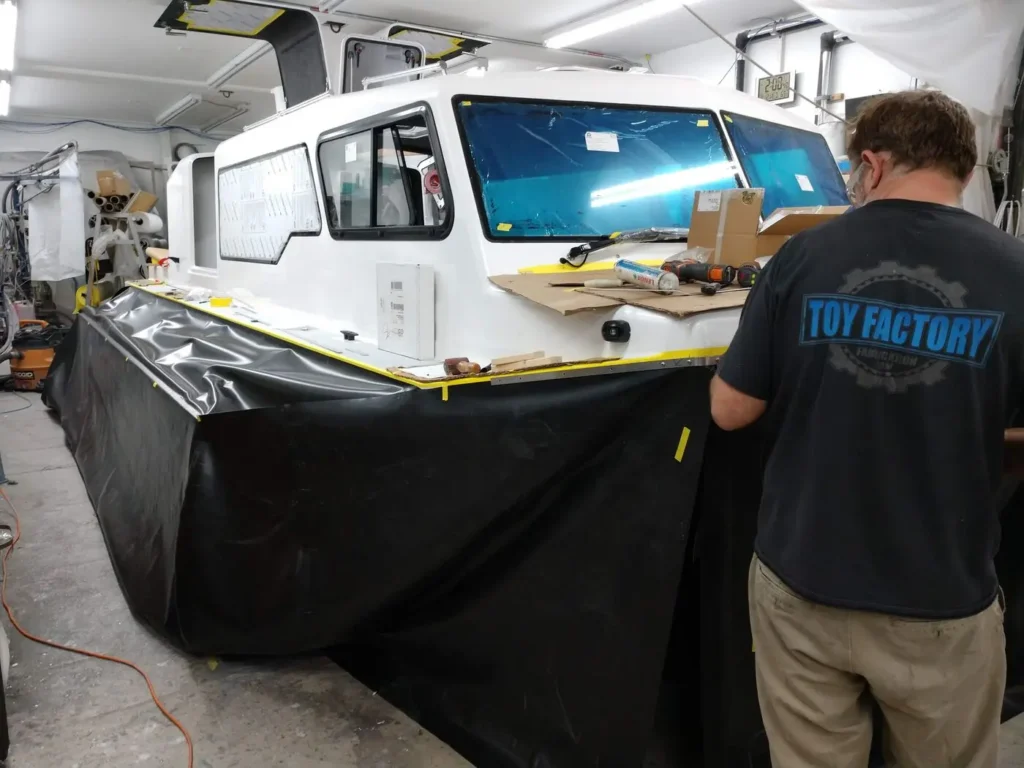
Skirt installed, cabin going on.
Engine and drive
Stainless frames, carbon belts, marine diesel.
The Explorer 24 runs a Steyr marine diesel, 164 hp, turbocharged and intercooled. It drives the lift fan and propeller through urethane and carbon fiber belts on hard anodized aluminum pulleys, with a flexible coupling from the engine.
On the Surveyor 16 a vertical shaft Kohler EFI engine turns the lift fan directly and the propeller through a single carbon fiber belt that never needs re-tensioning. Engine frames and propeller guards are stainless steel.
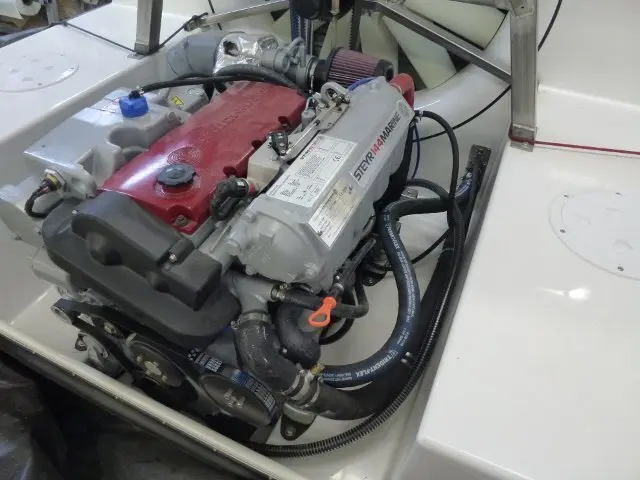
The Steyr diesel in an Explorer 24.
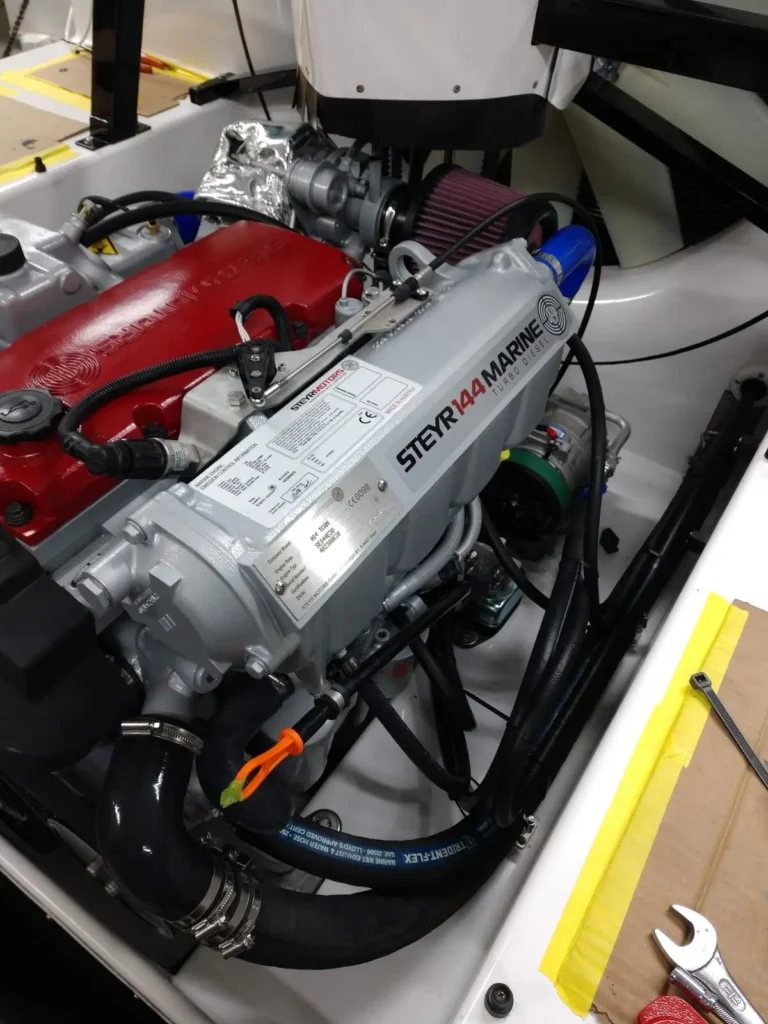
A Steyr marine diesel going into an Explorer 24.
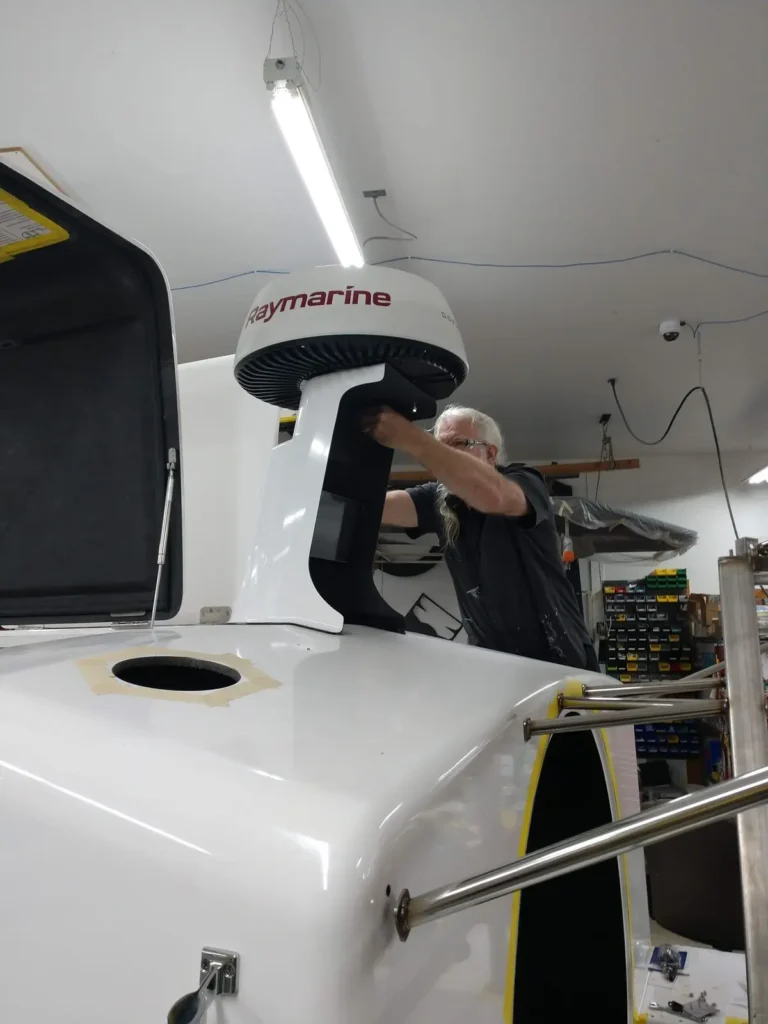
Fitting a Raymarine radar to the cabin top.
Flotation and safety
Built to stay on top.
Sealed compartments
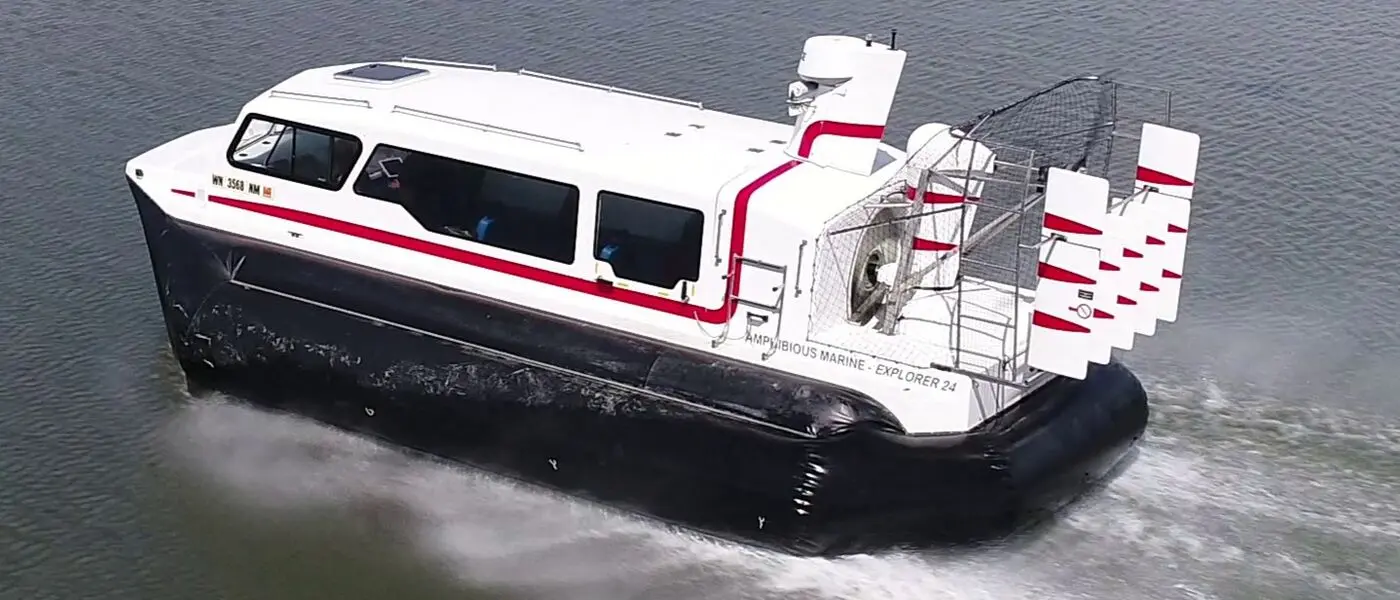
Three sealed compartments, front and rear. The Explorer 24 has 5,000 lb of flotation, the Surveyor 16 has 1,500 lb.
No wood
There is no wood anywhere in the structure, so nothing can rot or soak up water.
Saltwater ready
Stainless fasteners, anodized aluminum and composite hulls stand up to saltwater service.
Talk to the builder
Tell us the job, and we will tell you which craft fits it, or build one that does.
Call or email with where you operate, how many people or how much weight you need to carry, and when you need it.