How does a hovercraft work?
How our hovercraft work.
A cushion of pressurized air, a flexible skirt, a propeller, and brakes you will not find on any other hovercraft. Here is how the pieces fit, and why ours use so little fuel.
The basics
Air under the hull instead of water around it.
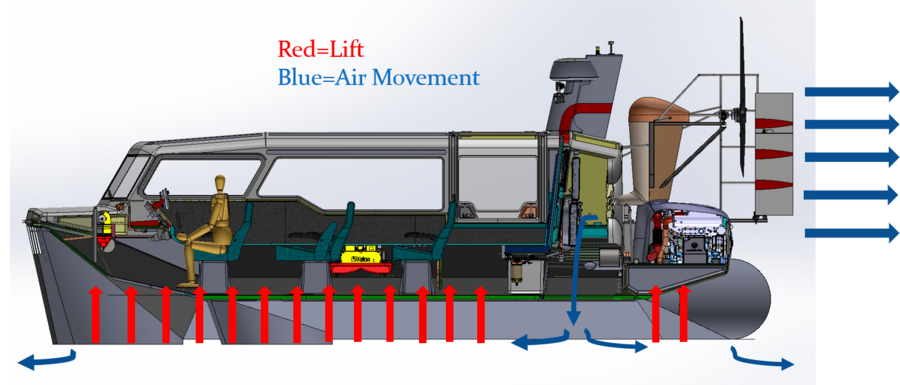
A hovercraft, or air cushion vehicle, traps pressurized air between the hull above, the water or ground below, and a flexible skirt around the edge. The lift fan builds that pressure, and a thin layer of air escapes under the skirt so it slides with very little friction. How much air escapes also affects how long the skirt lasts.
The skirt holds the rigid hull clear of the surface, so the craft can cross rough ground and waves. That is what makes it amphibious, and it is why it wastes so little energy over water.
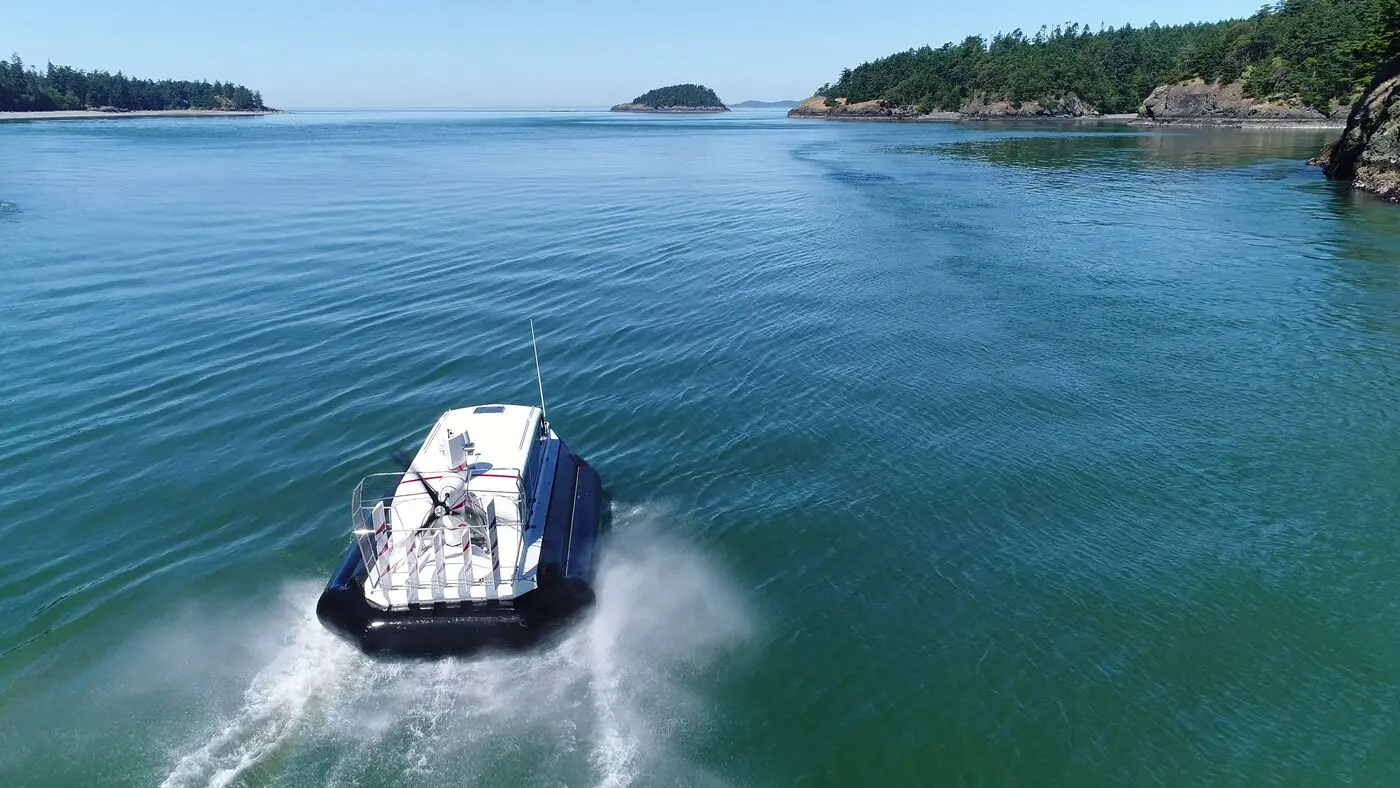
Look at the wake behind a typical powerboat. Where did that wave come from? It is the hull pushing through the water at speed, and every bit of it took energy from the engine.
Four systems
What each part does.
Step 1
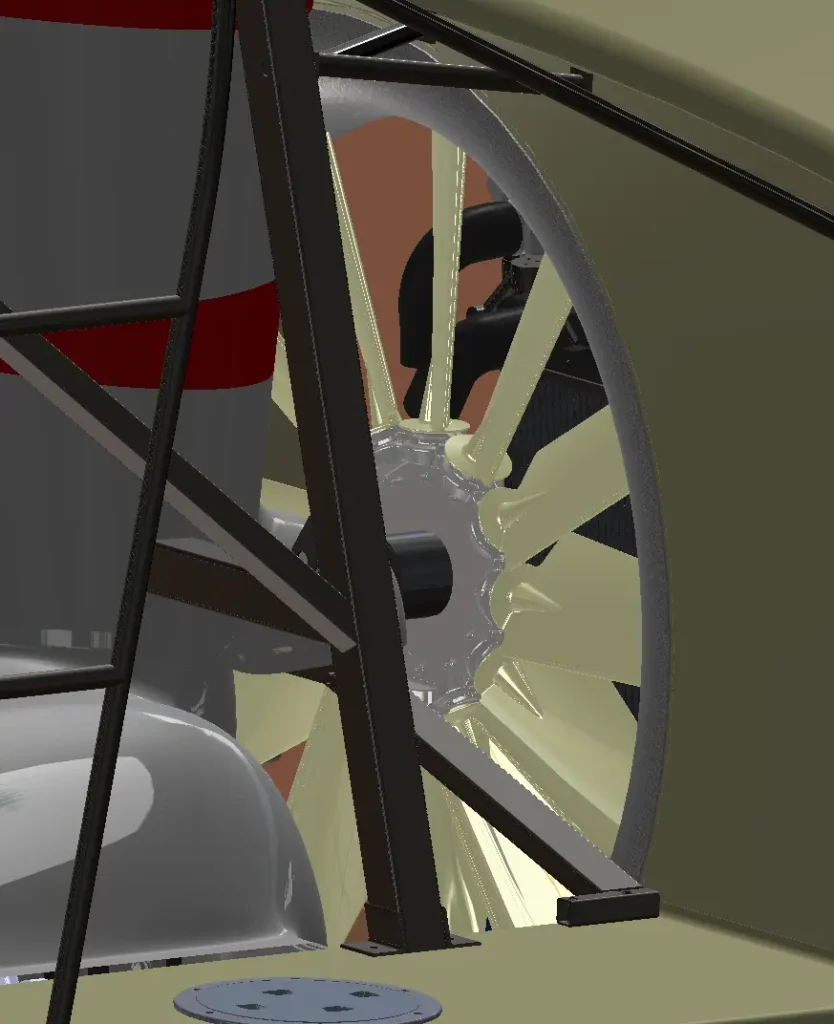
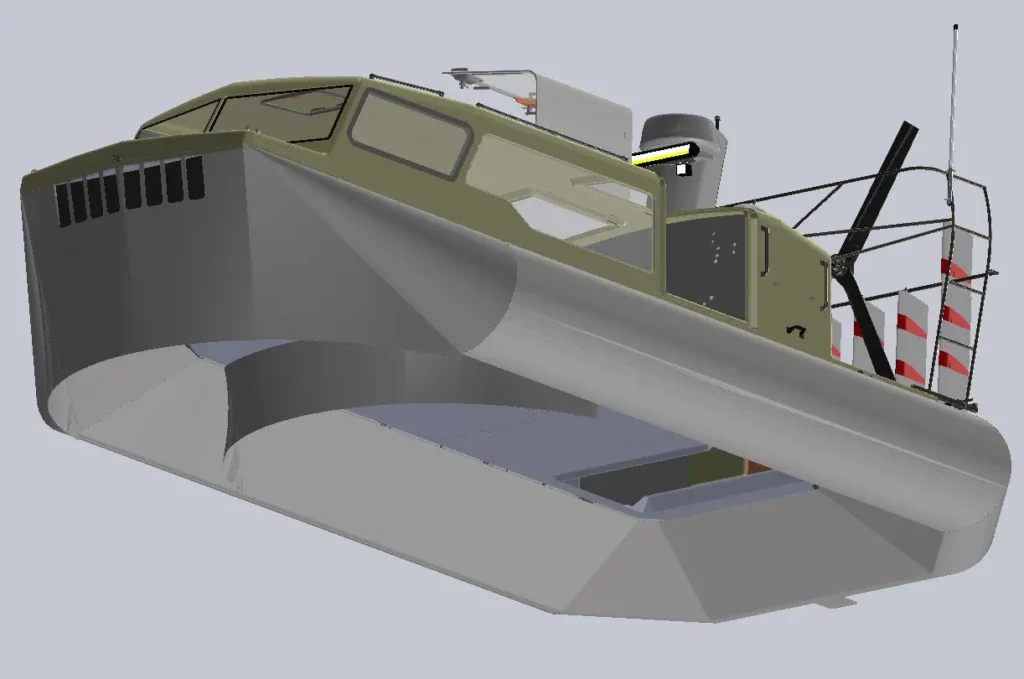
Lift fan
Pushes air under the hull to build the cushion. On the Explorer 24 it is a 34 inch, 12 blade adjustable pitch fan.
Step 2
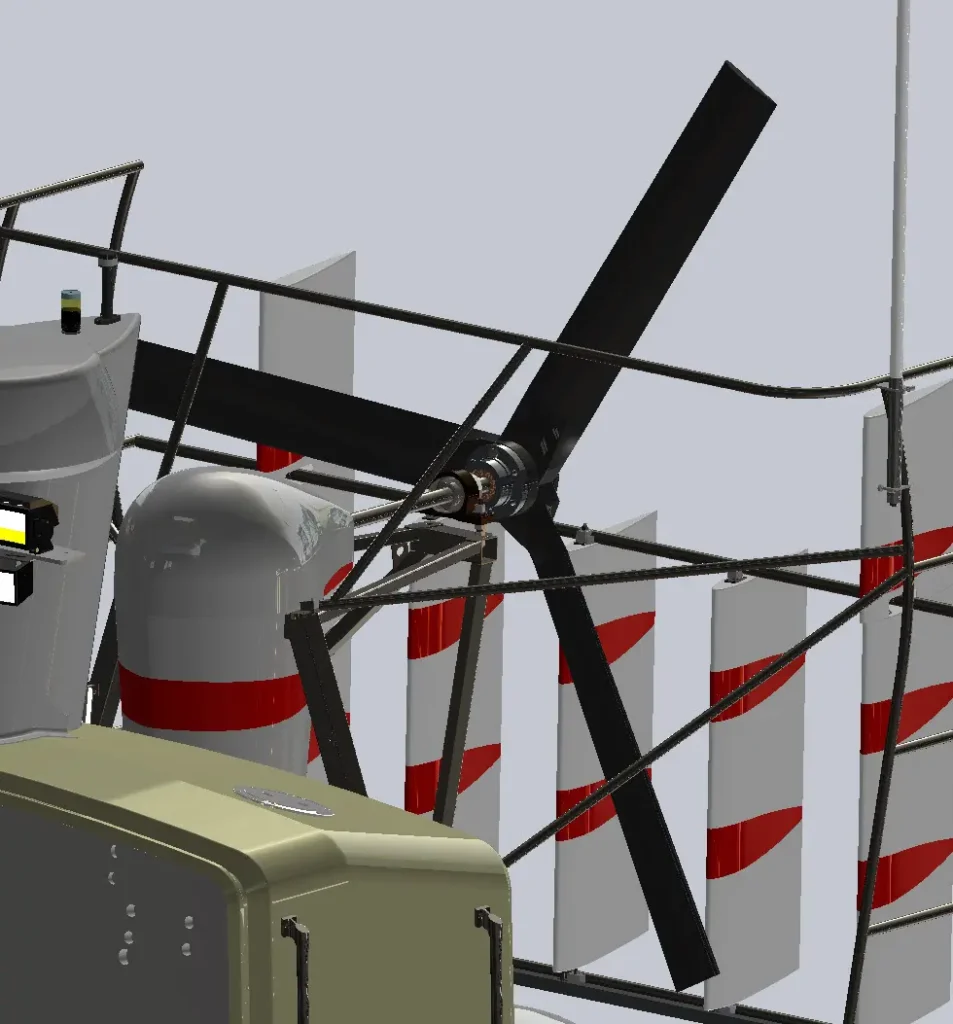
Skirt
A flexible urethane skirt holds the air in. Ours are multi-compartment, with large bag skirts on the sides and rear for stability.
Step 3
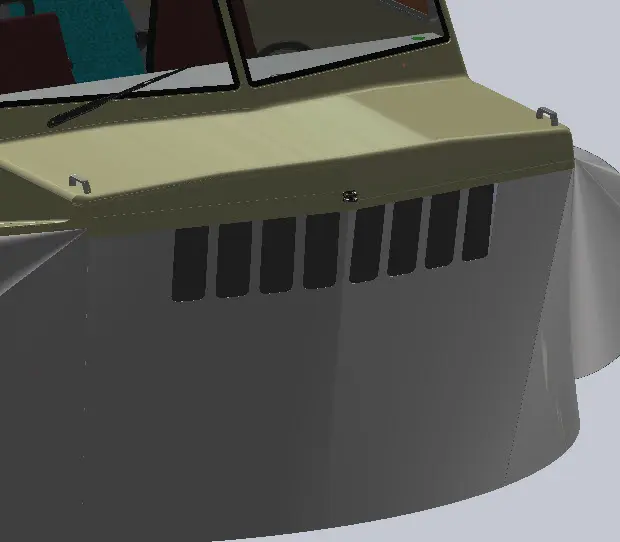
Thrust propeller
A large, slow turning propeller moves the craft forward and keeps noise down. Rudders behind it steer.
Step 4
Brakes
Eight ports in the bow skirt, opened with a foot pedal at the helm, let the pilot slow, stop and turn. This is unique to our hovercraft.
Only on our craft
A hovercraft that can brake.
Do hovercraft have brakes? Some do, most do not. Small hovercraft often spin 180 degrees and apply reverse thrust. It looks fun, but you cannot see behind you, and dirt and spray cover the machine. Other systems redirect air forward with louvers or deflectors, or reverse the propeller pitch. These do slow the craft, but they add complexity, and most cost performance in normal forward running, which calls for more power and a heavier engine.
For more than 50 years our skirt system has taken a different approach, first developed by Barry Palmer for the SEVTec line of craft. Our brake uses direct drag to slow the craft, which is more powerful yet simple. Combined with the rudders, it also gives precise directional control.
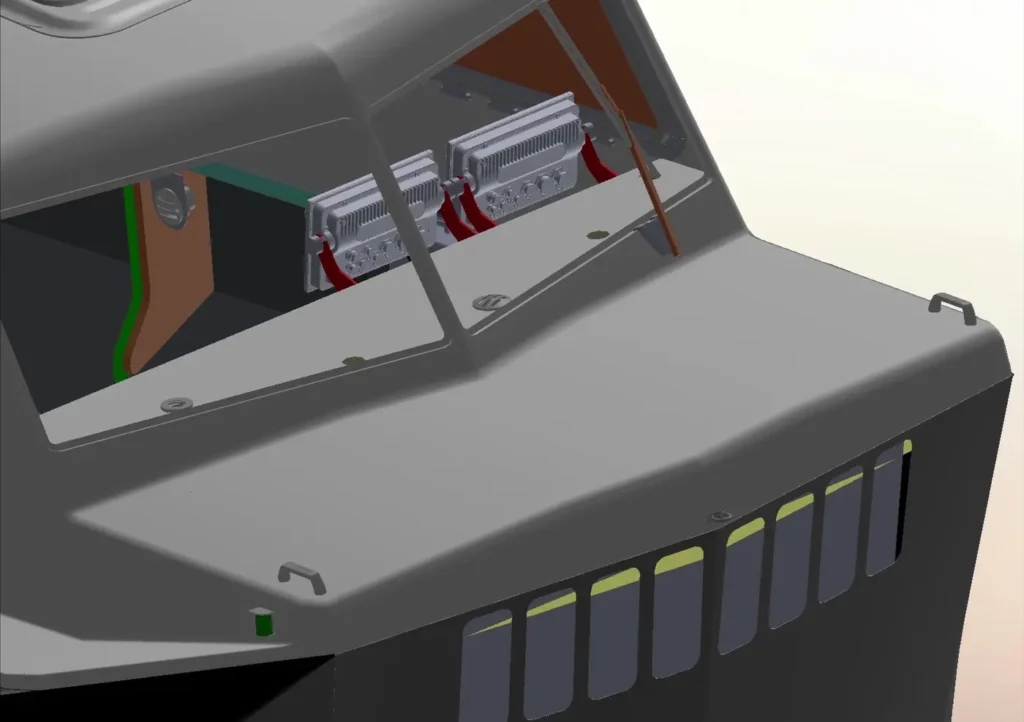
The eight brake ports in the bow skirt, from our CAD model.
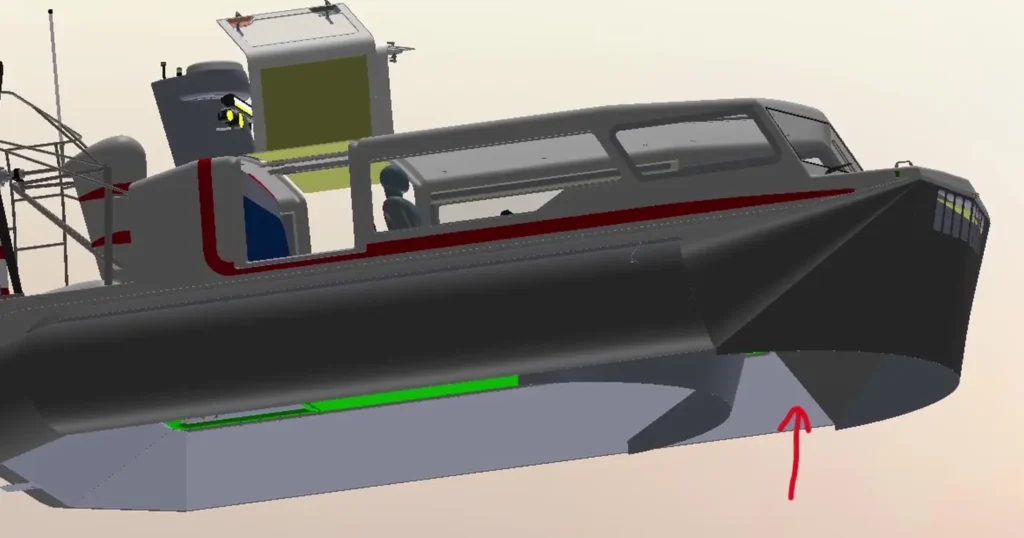
Where the ports open, just under the bow (red arrow).
How the brake works
The brake uses our multi-compartment skirt to let the pilot control the pressure of the forward air cushion with a foot pedal. As the pedal goes down, a brake vent flap inside the skirt uncovers eight ports in the bow skirt.
The more the vent opens, the more the bow lowers and the skirt drags. Fully applied, the hull’s planing surface comes into contact with the water. That slows the craft far more than reverse thrust can.
Once the craft is going slowly enough, the pilot can put the rudders hard over and it spins on its nose. With practice, a pilot applies just the right amount of brake to help a turn, or stops the Explorer 24 quickly in an emergency.
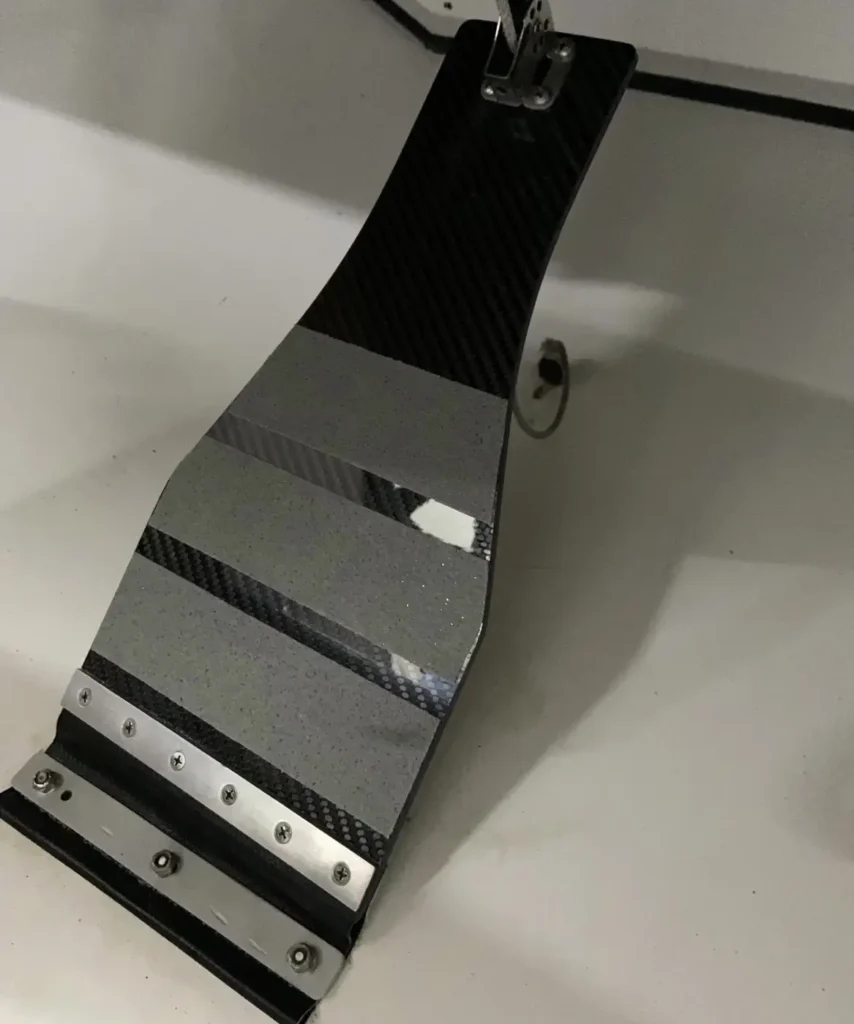
The brake foot pedal at the helm.
Turning with the brake
A hovercraft has nothing in the water to grip, so in a turn it wants to slide sideways, like a car on ice. The brake is what lets our pilots turn where they mean to go.
Pressing the pedal lowers the bow and puts drag at the front of the craft. The rudders swing the stern around that point, so the pilot can apply just the right amount of brake to tighten a turn and hold a line instead of drifting wide.
At low speed, with the rudders hard over and the brake on, the craft spins on its nose. Used together, the rudders, throttle and brake give precise control for docking, landing on a beach or trailer, and working in tight channels.
Bryan using the brake to control both his speed and his sideways drift as he threads a tight river on a Surveyor 16, seen from above.
Braking on the water
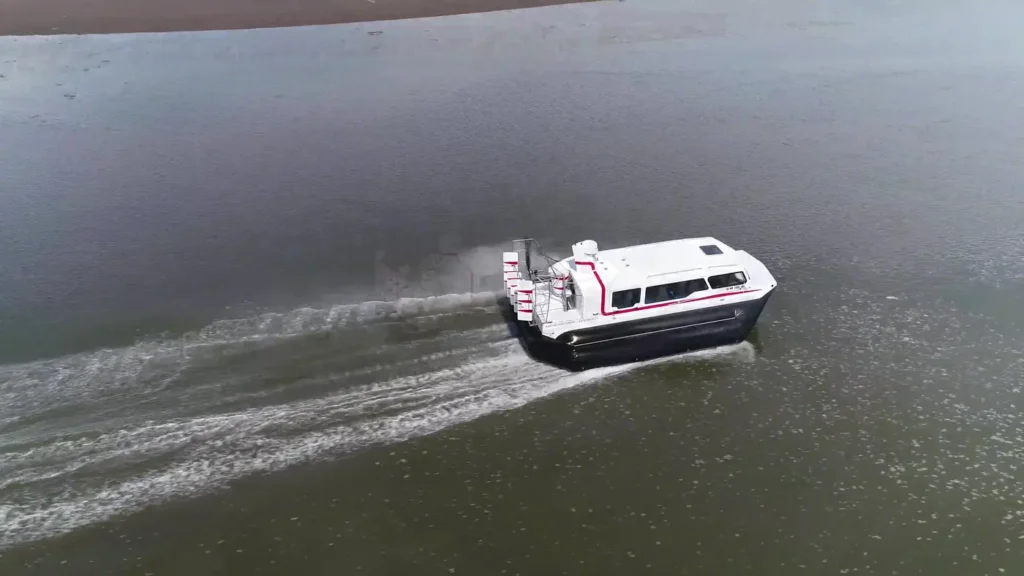
Brake at 25%: the craft slows smoothly.
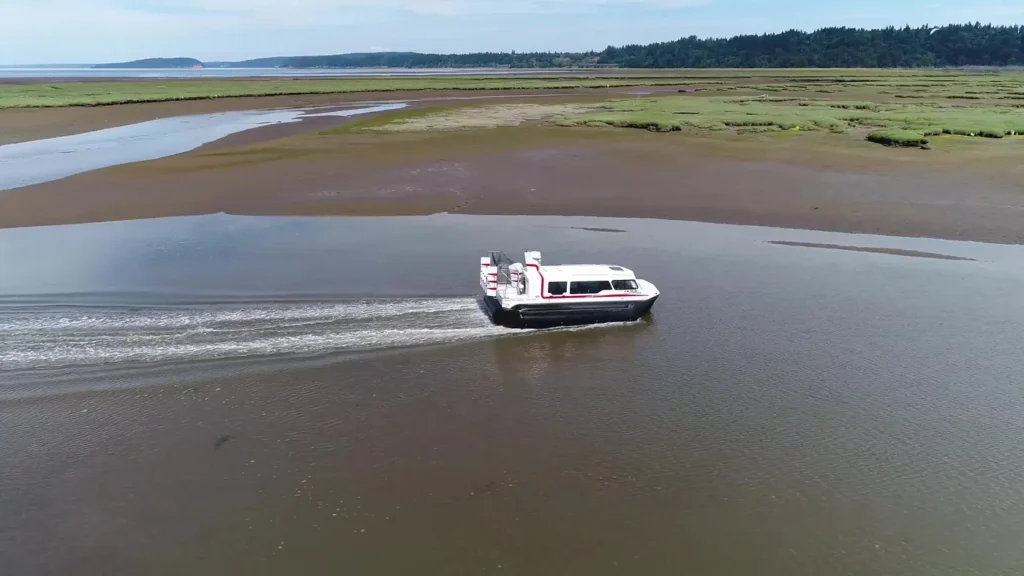
Brake at 60%: a firmer stop.
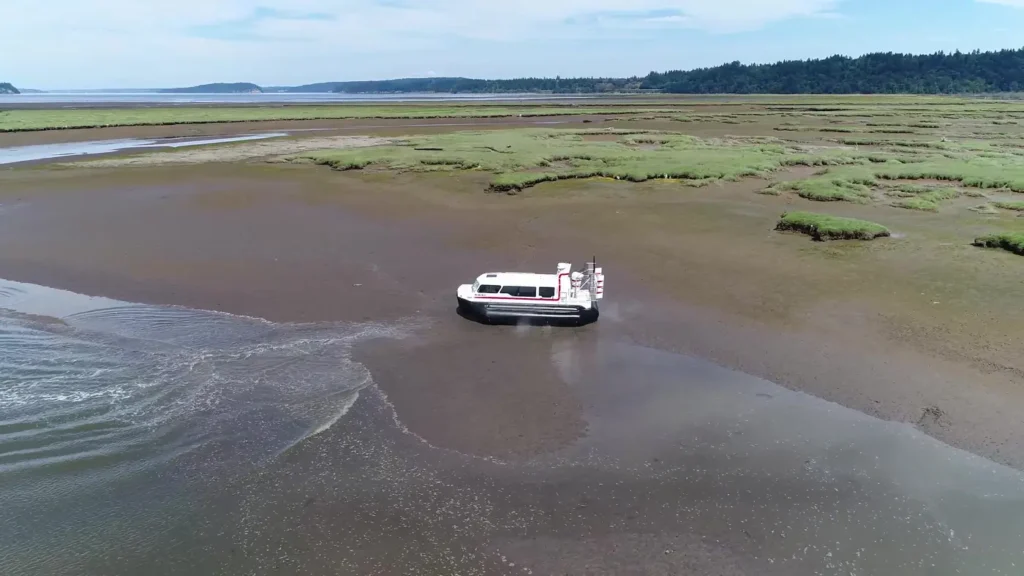
Brake released, and the craft turns away.
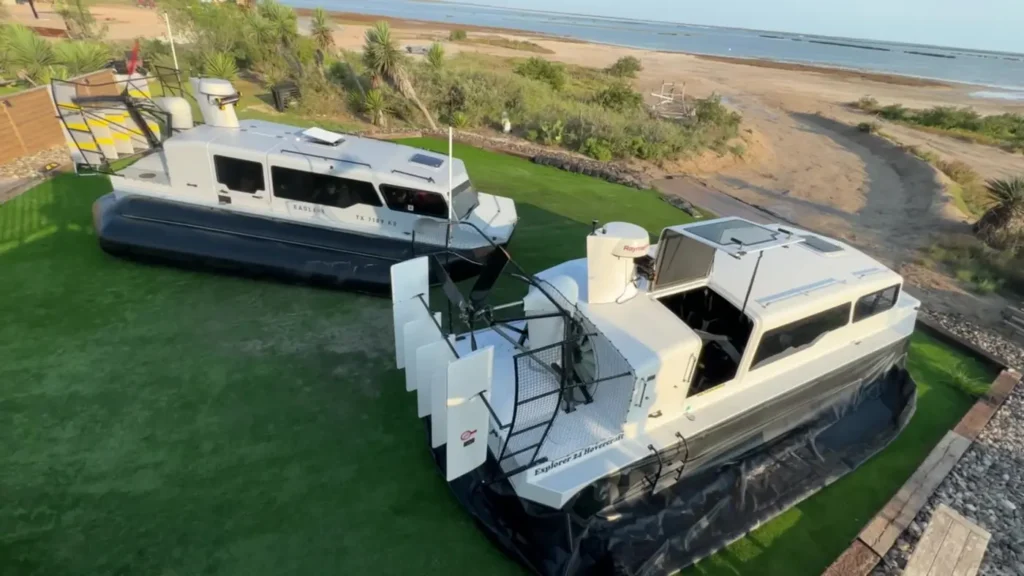
Rudders, throttle and brake together to set the craft down on the lawn.
Watch the brake video
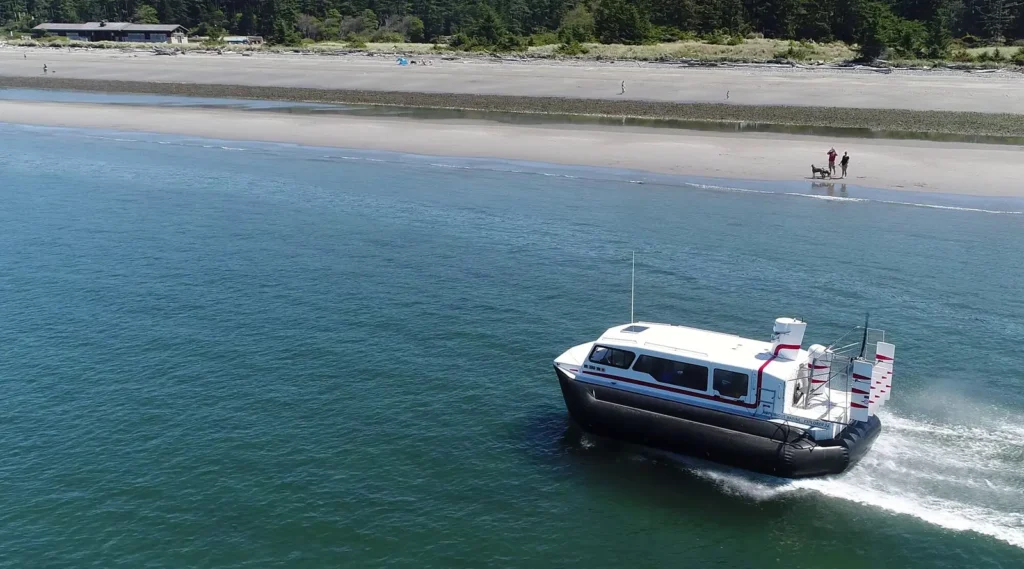
An Explorer 24 running along West Beach, Deception Pass State Park.
Systems engineering
Weight decides everything.
One of the critical factors in a good hovercraft design is keeping the weight down. We look at every part for its effect on the whole craft, so more of the cushion goes to carrying passengers or cargo.
Efficient lift and thrust mean a smaller engine will do. That means less fuel to carry, a smaller tank, lighter engine supports, lighter drive parts and a smaller battery. Many hovercraft designs fall short because they skip this analysis and try to fix the problem with more power.
A skirt can only carry so much weight for the area it covers. A craft that is too heavy digs too deep a hole in the water to climb up on plane. Some designs are so heavy their payload is zero, and they can only start from land and build speed before they reach the water.
Modern materials
Lighter craft do more work.
We use modern composites to cut weight so the craft can carry more for you. A light, efficient design also uses less power, burns less fuel, and makes less noise for you and your neighbors.
When the engine is off, our craft float better than most boats. They are light and flat bottomed, and very stable both on and off the cushion.
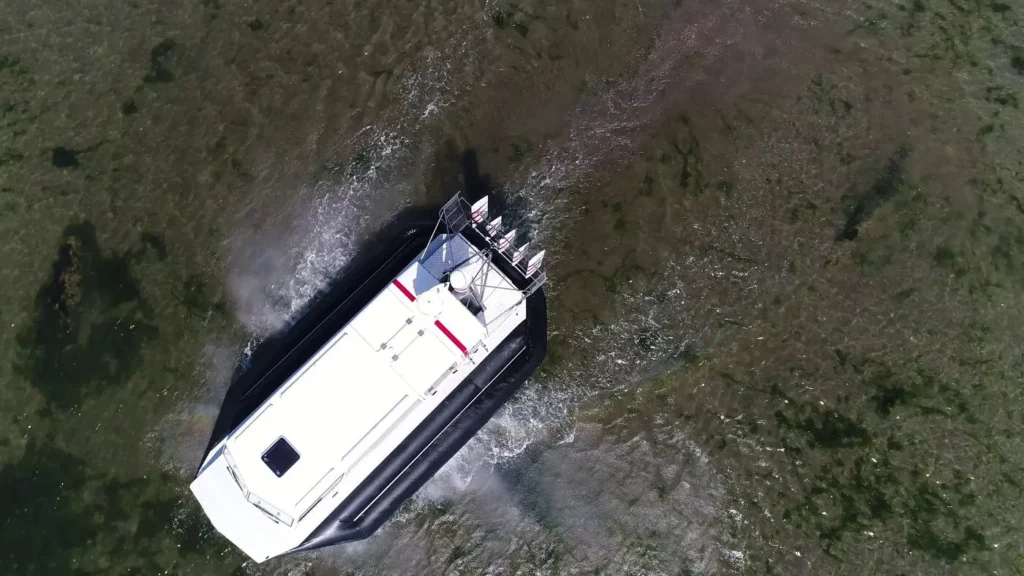
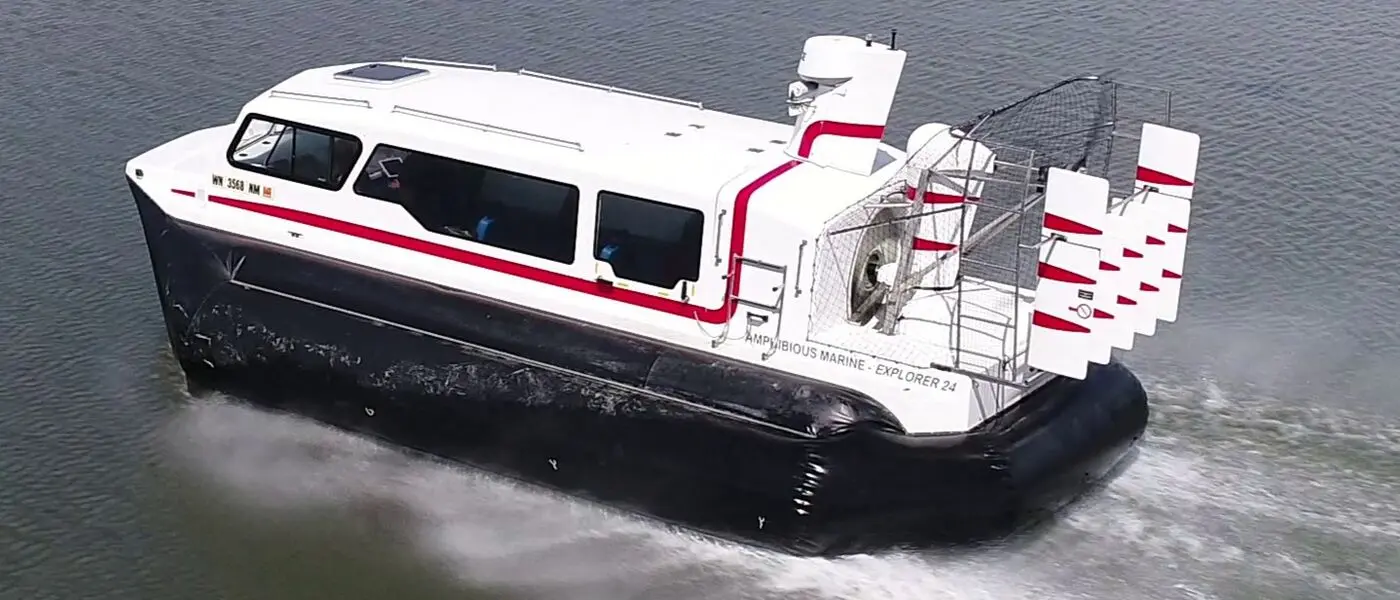
An Explorer 24 over a marsh.
Talk to the builder
Tell us the job, and we will tell you which craft fits it, or build one that does.
Call or email with where you operate, how many people or how much weight you need to carry, and when you need it.