Alaska and remote access
Hovercraft for Alaska and remote access.
Reach a cabin, a camp or a claim up a shallow river, and make the whole trip without a fuel cache.
The usual way in
No fuel cache, no float plane.
On a long river trip in Alaska or the North, the usual choices are an airboat or a jet boat. Both burn much more fuel, so people often hire a float plane to drop fuel ahead of them along the river. That gets expensive fast. A hovercraft can make the same trip unsupported, for much less.
Explorer 24: 3.4 gal per hour at 32 mph
Surveyor 16: 1.6 gal per hour at 30 mph
On flat water that works out to about 9 miles a gallon for the Explorer 24 and about 19 for the Surveyor 16. Wind, current and load change it, so tell us your route and we will help you plan the fuel.
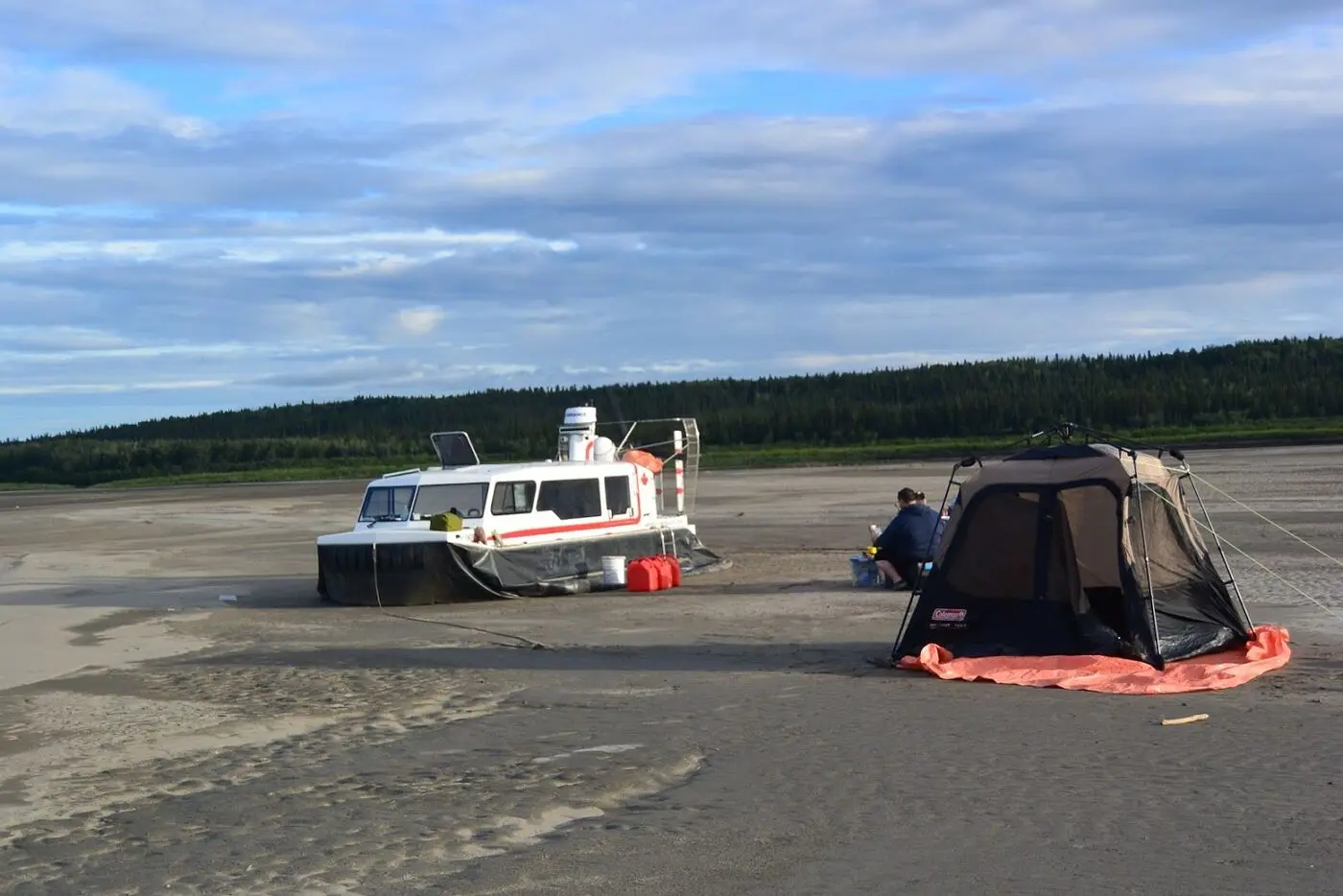
Camped on a Mackenzie River sand bar, with no support boat.
Scout as you go
Read the river slowly instead of hitting it fast.
A jet boat has to run shallow water at speed to stay up, often through stretches no one aboard has run before. When it does get stuck, it really gets stuck, because it plows onto the gravel or sand at speed. A hovercraft rides on its cushion of air, so it can take shallow and unknown water at a smooth, slow pace and scout as it goes.
- Crosses gravel bars, sand bars, mud and shallows only inches deep
- Keeps going on ice and snow at the start and end of the season
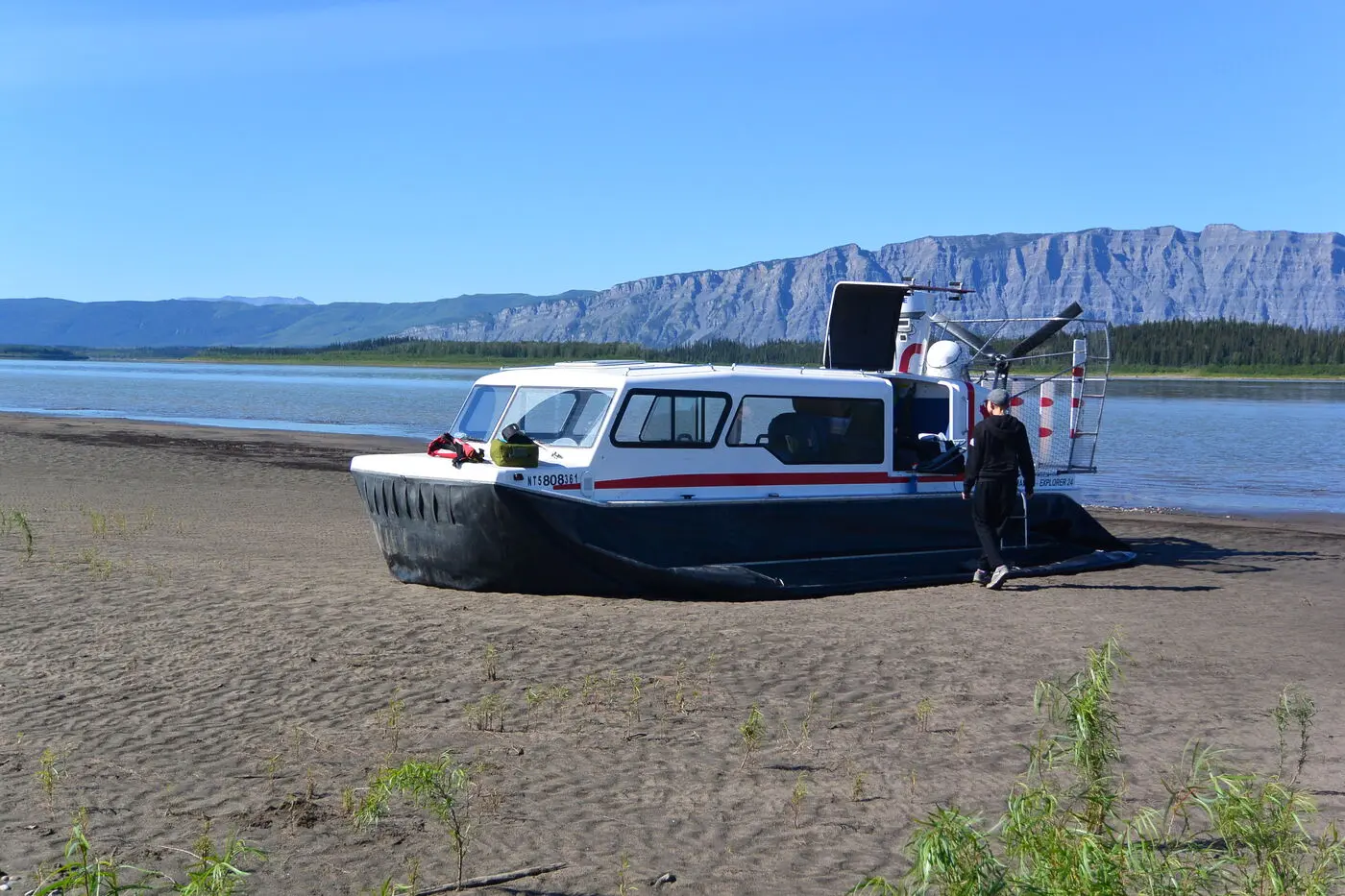
- Lands on a gravel bar or a beach for the night, with no dock or anchor
- Brakes that let the pilot slow and turn in a tight channel. See how the brake works.
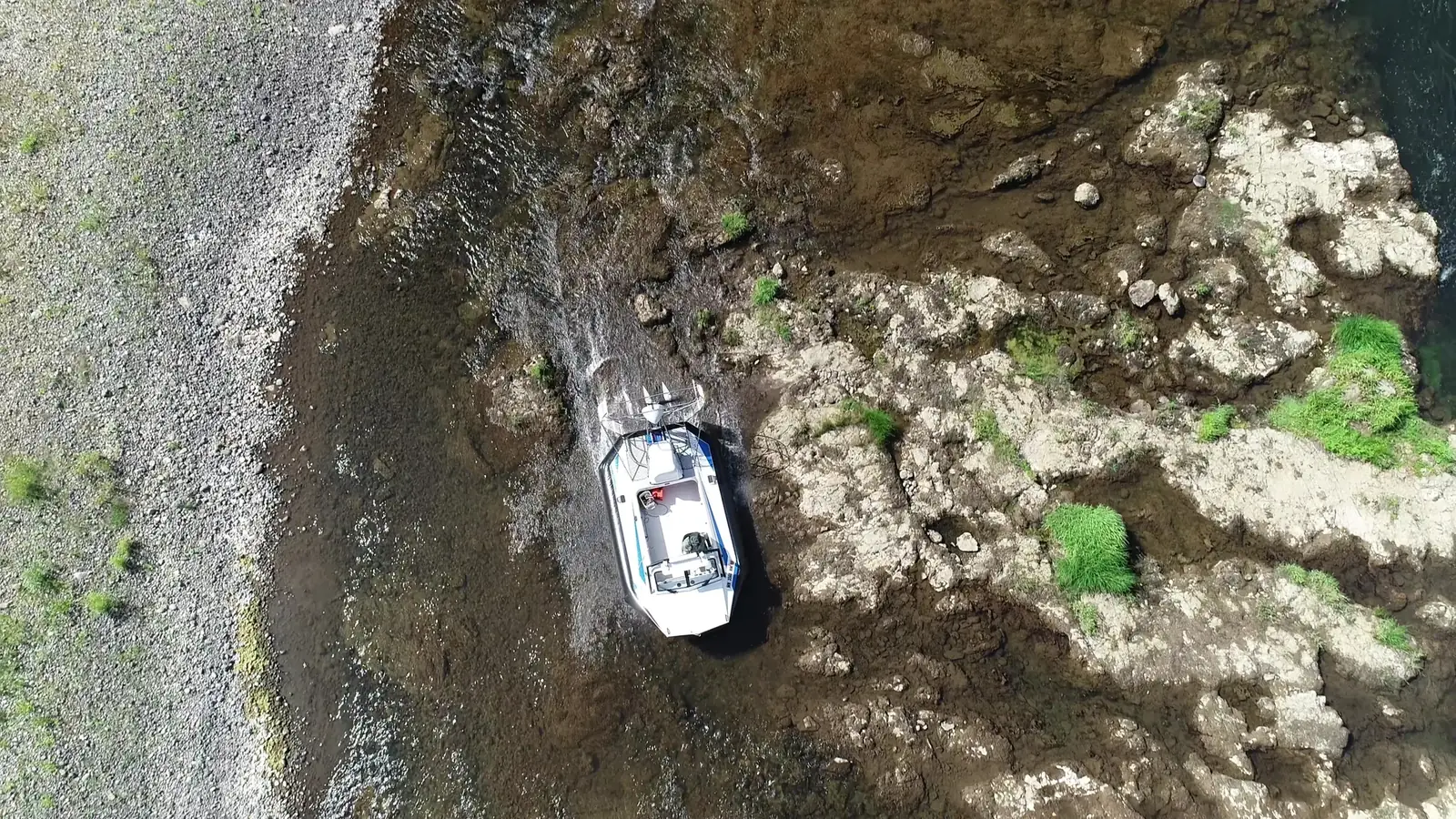
A Surveyor 16 passing right over rocky shallows.
Proven far from help
Long trips, run without a support boat.
Our craft have run 1,800 miles down the Mackenzie River to the Arctic Ocean and 1,400 miles up the Inside Passage to Alaska. The first Explorer 22 TDi ran the Stikine River from Wrangell and now works in Gates of the Arctic National Park, and kit built craft support gold claims around Chicken, Alaska.
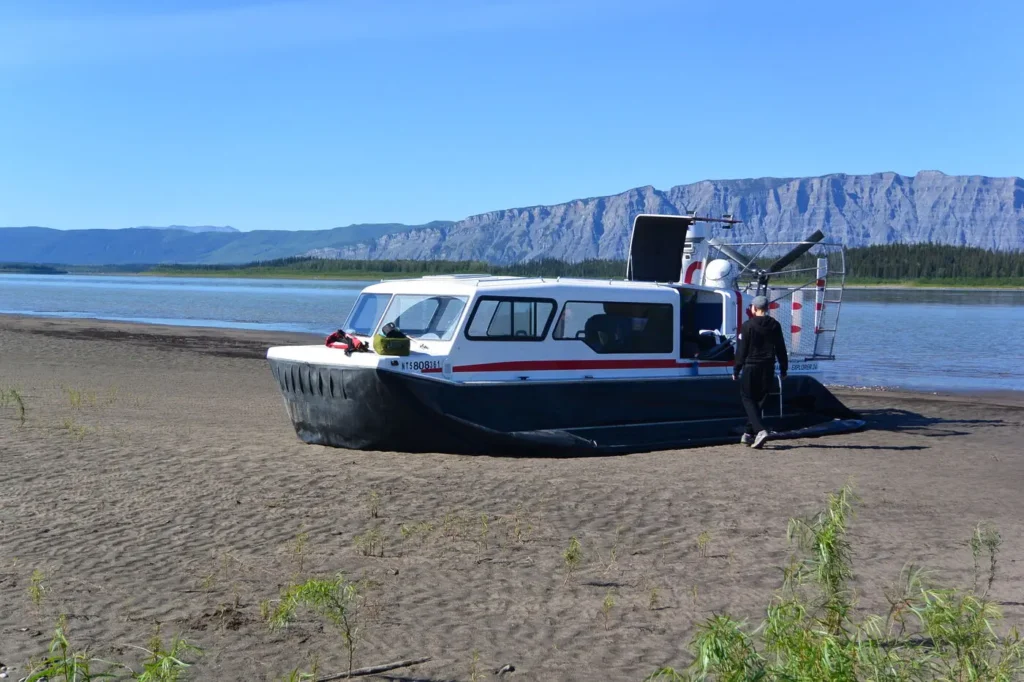
Paul’s Explorer 24 on the Mackenzie River, Yellowknife to the Arctic Ocean.
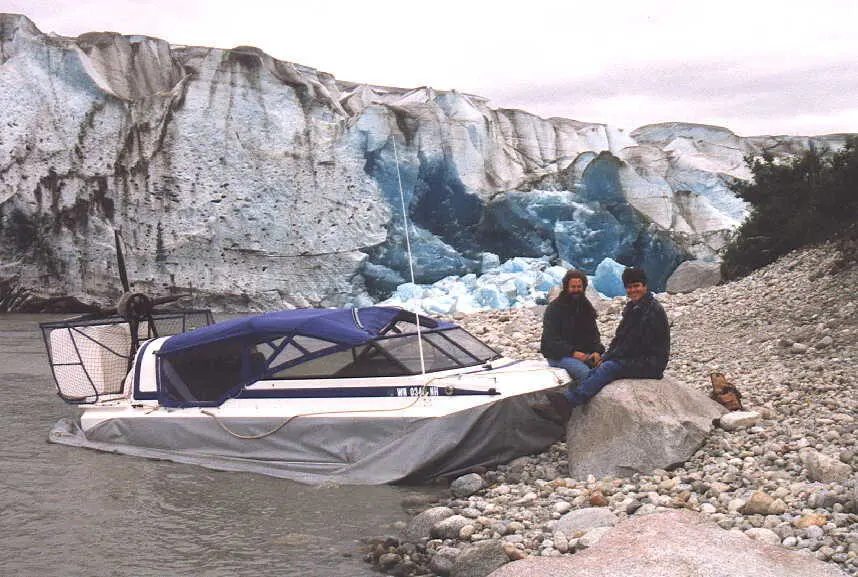
1998: the Explorer 20 prototype reached the Taku Glacier after 1,400 miles with no support vessel.
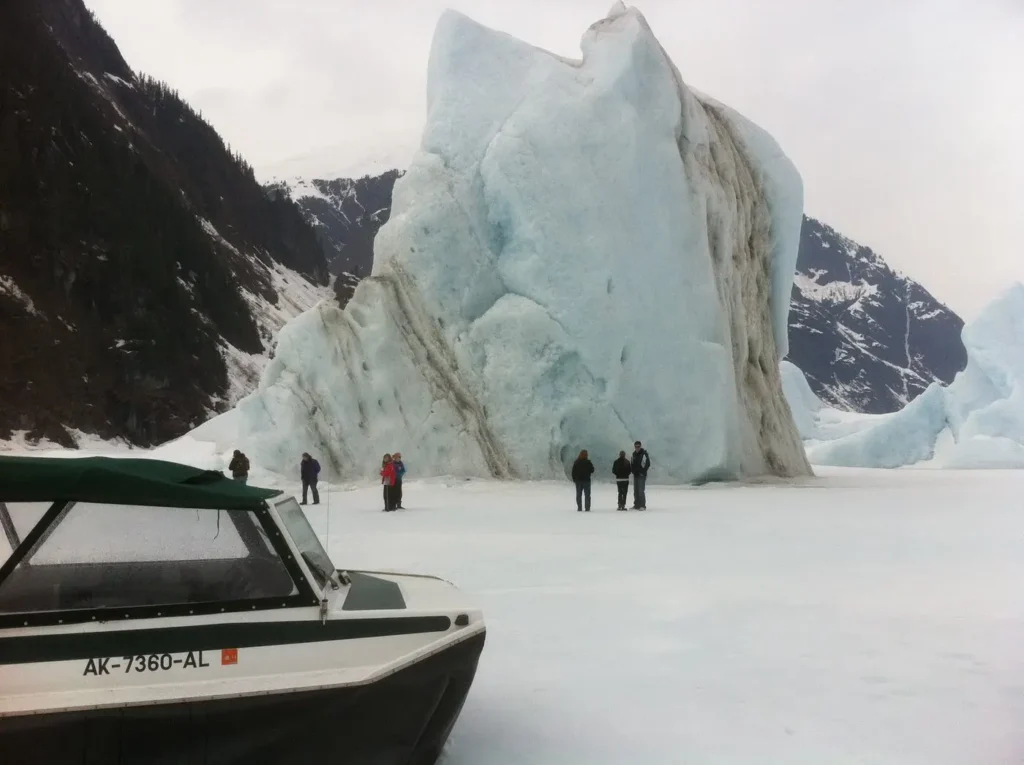
The first Explorer 22 TDi on the Stikine River near Wrangell.
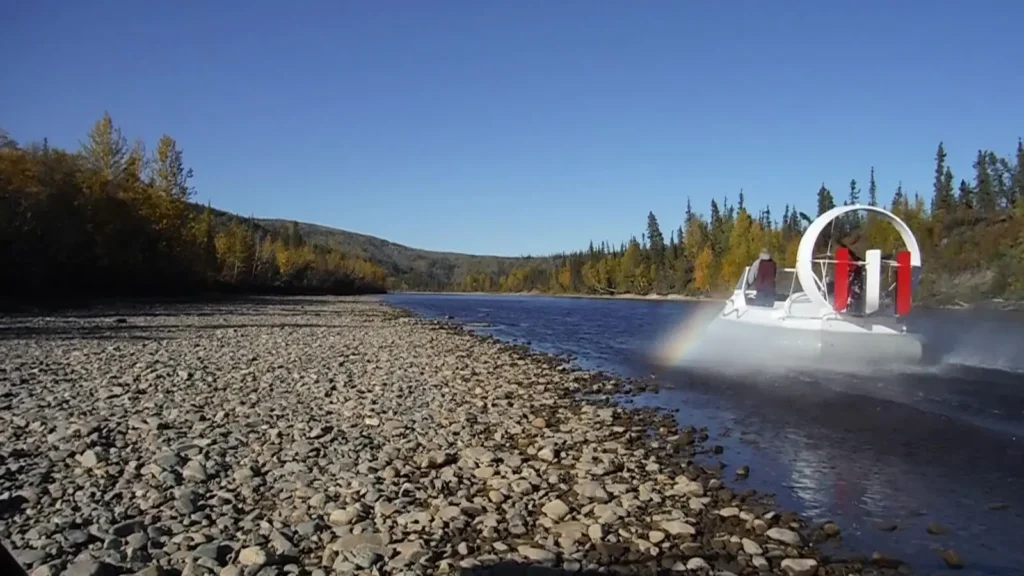
A kit built Geoduck on the Fortymile River near Chicken, Alaska.
Which craft
Two hovercraft for remote country.
Pick by how many people and how much gear you carry.
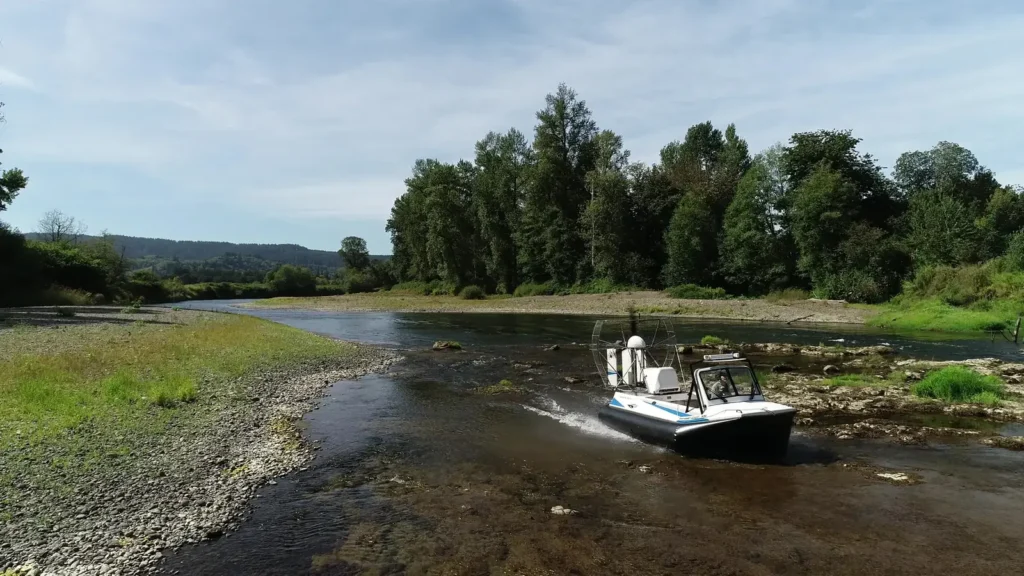
Surveyor 16
Light, efficient and simple to keep running far from a shop. It carries five adults or 1,100 lb and burns 1.6 gallons an hour at a 30 mph cruise.
5 adults
1,100 lb payload
1.6 gal per hour
37 hp Kohler EFI
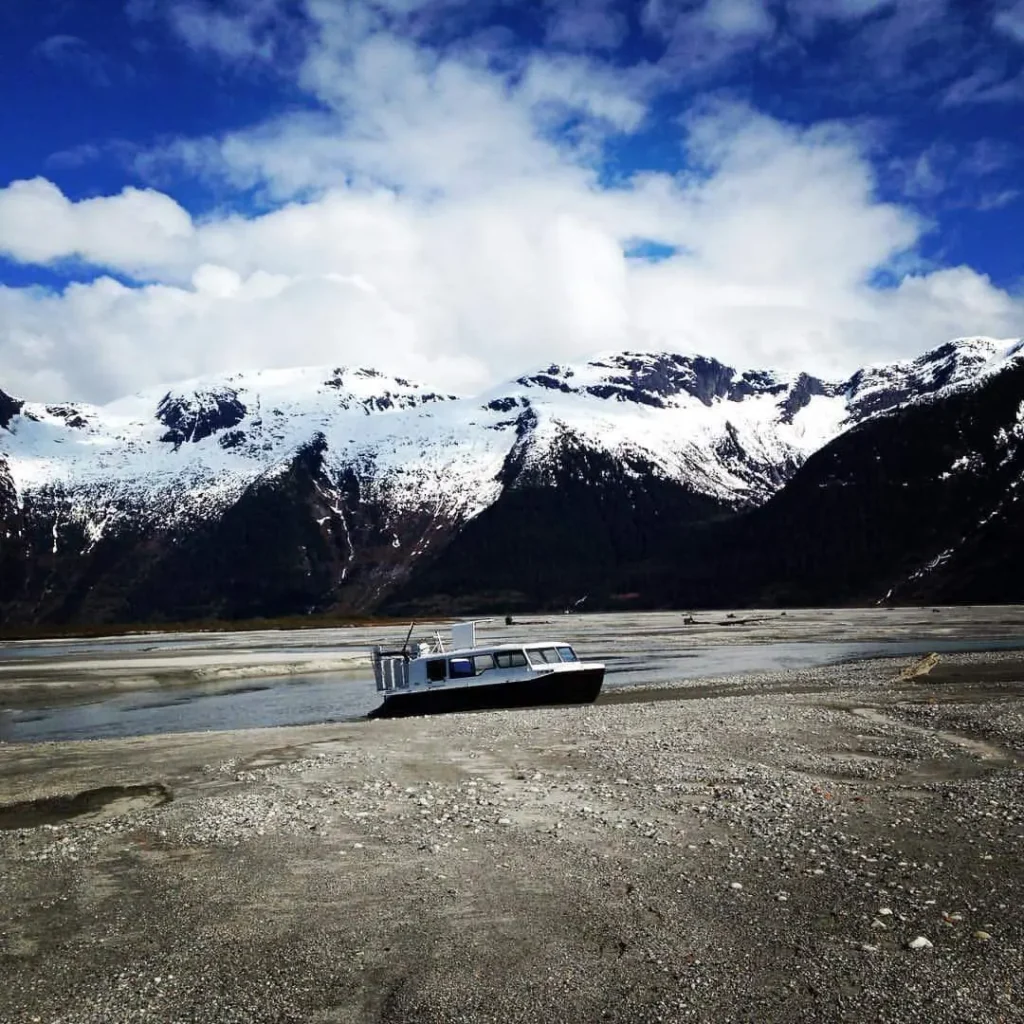
Explorer 24
A fully enclosed cabin for up to twelve, with 2,400 lb of payload for people, gear and supplies. Its Steyr diesel burns 3.4 gallons an hour at cruise, and it has run expeditions as far as the Arctic.
12 adults
2,400 lb payload
3.4 gal per hour
164 hp Steyr diesel
Launching
No ramp at the river? No problem.
Gravel bars are a common launch spot in Alaska, and most have no ramp at all. Our ground deployment trailer lets the Explorer 24 fly on and off the trailer from the ground, and the craft folds down to 8.5 feet wide for the road.
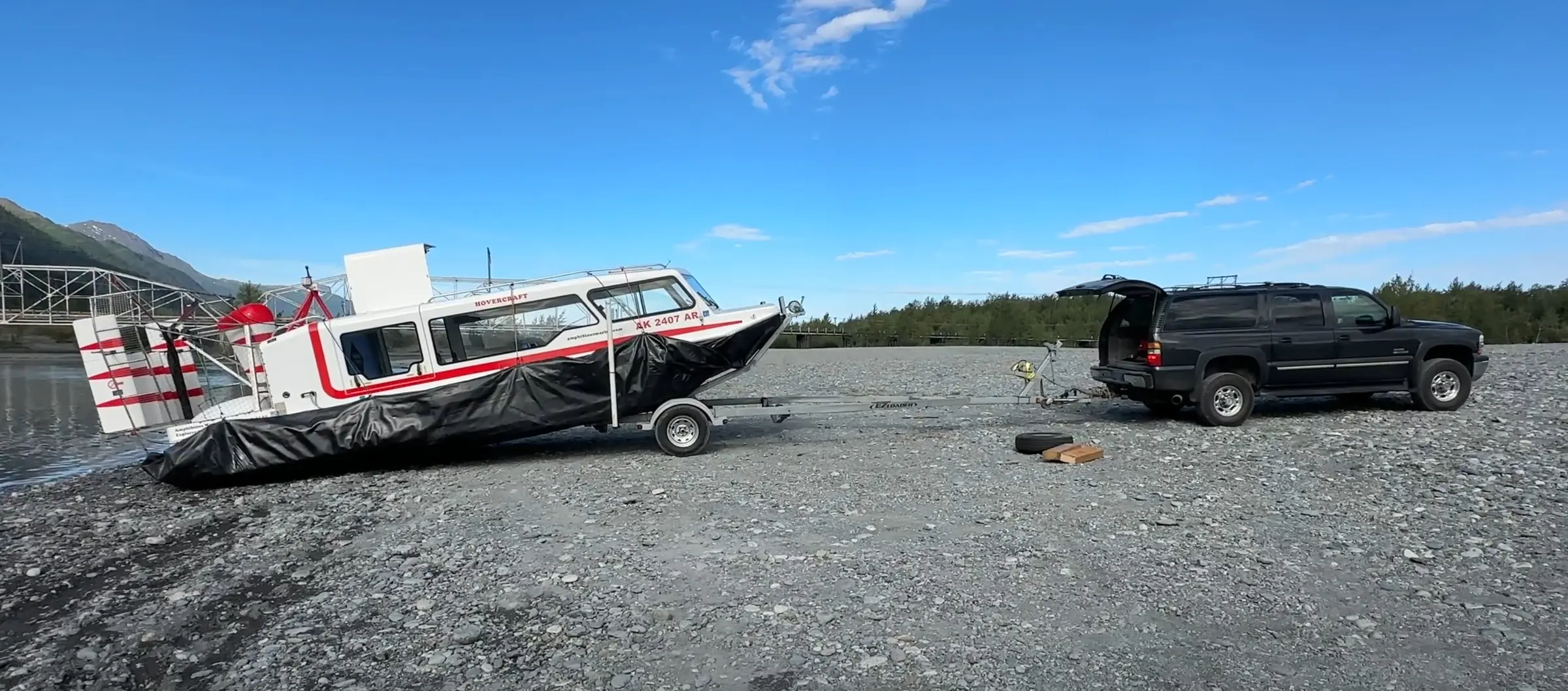
On the ground deployment trailer, on an Alaska gravel bar.
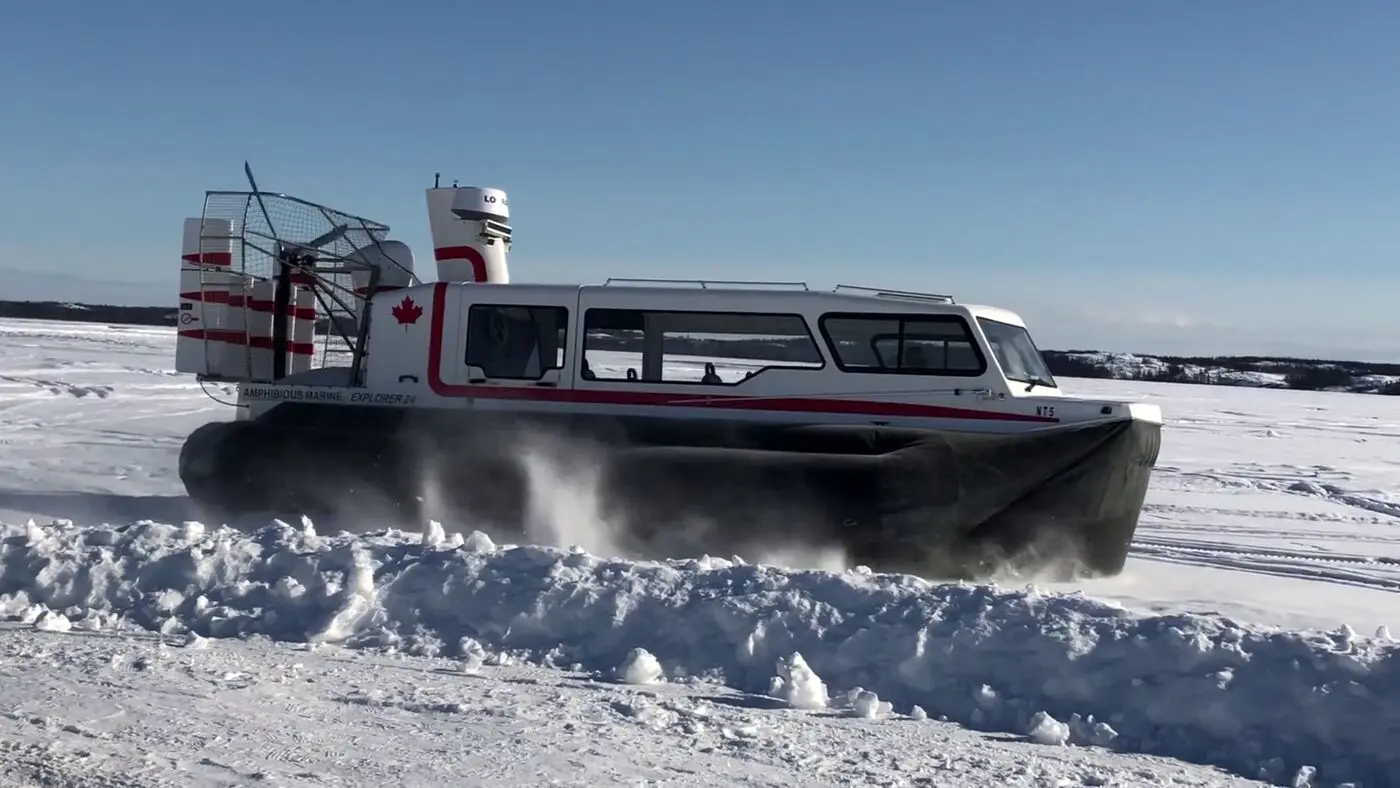
Alaska and remote access
Tell us where you need to go.
Call or email with the river or coast, the distance and what you need to carry. We will tell you which craft fits.