The 1998 expedition
North to Alaska by hovercraft.
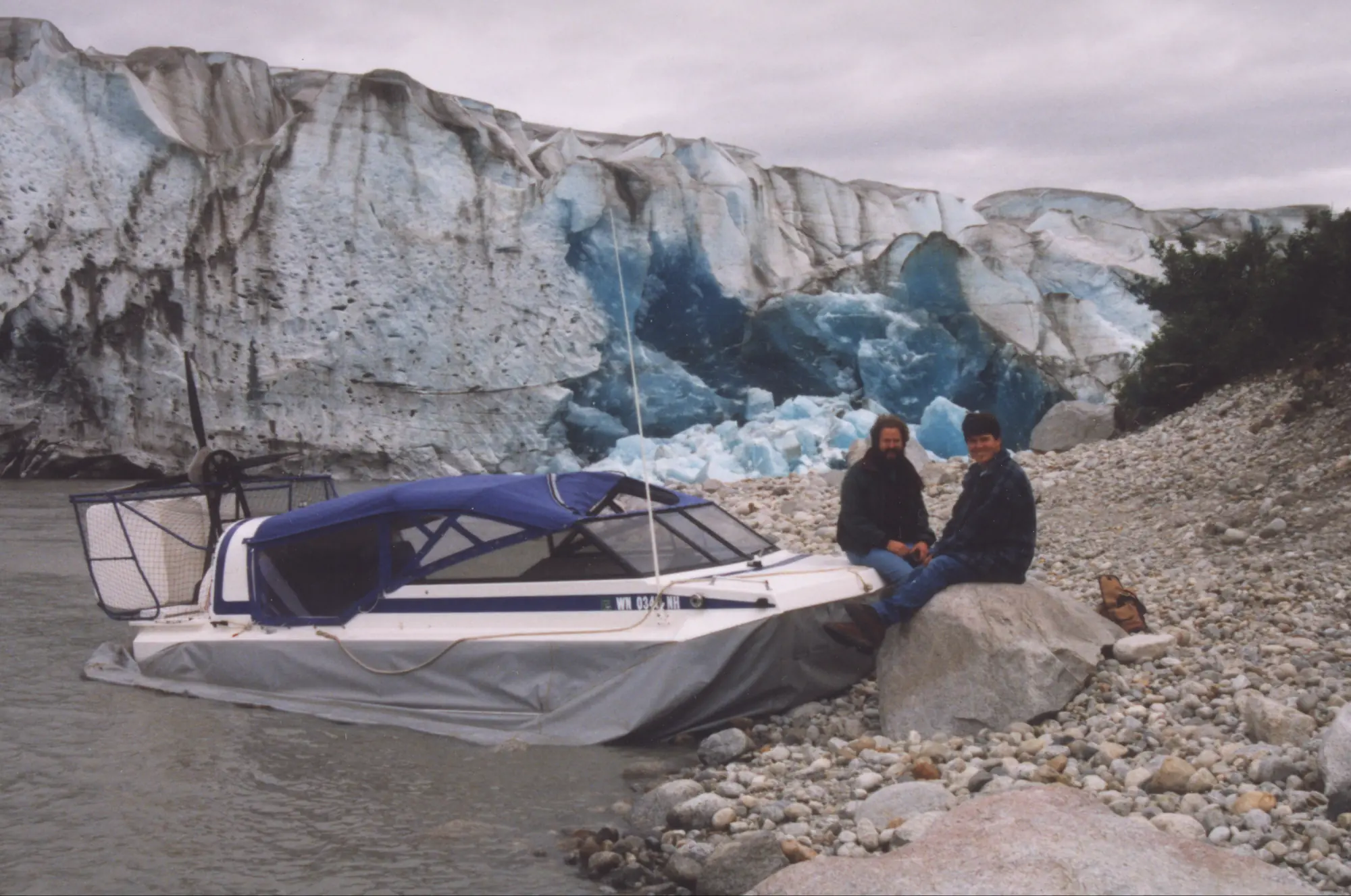
In the summer of 1998, three of us ran the prototype Explorer 20 from Anacortes, Washington to Juneau, Alaska. About 1,400 miles up the Inside Passage on 140 gallons of fuel, with no support boat. No hovercraft had done it before, and none has since.
Blogged as it happened, day by day from the boat, with a laptop and a cell phone. That was 1998, years before blogs were common. John Carter’s original pages are still online at hovernut.com.
1,400 mi
From Anacortes to Juneau, through Canadian waters and the length of southeast Alaska
28 days
The whole trip, including 13 days on the water to Juneau and our runs up the Taku River
140 gallons
Fuel for the whole 28 day trip, about 10 miles a gallon from a 55 horsepower engine
0
Support boats. Everything we needed rode aboard a 20 foot hovercraft
The craft
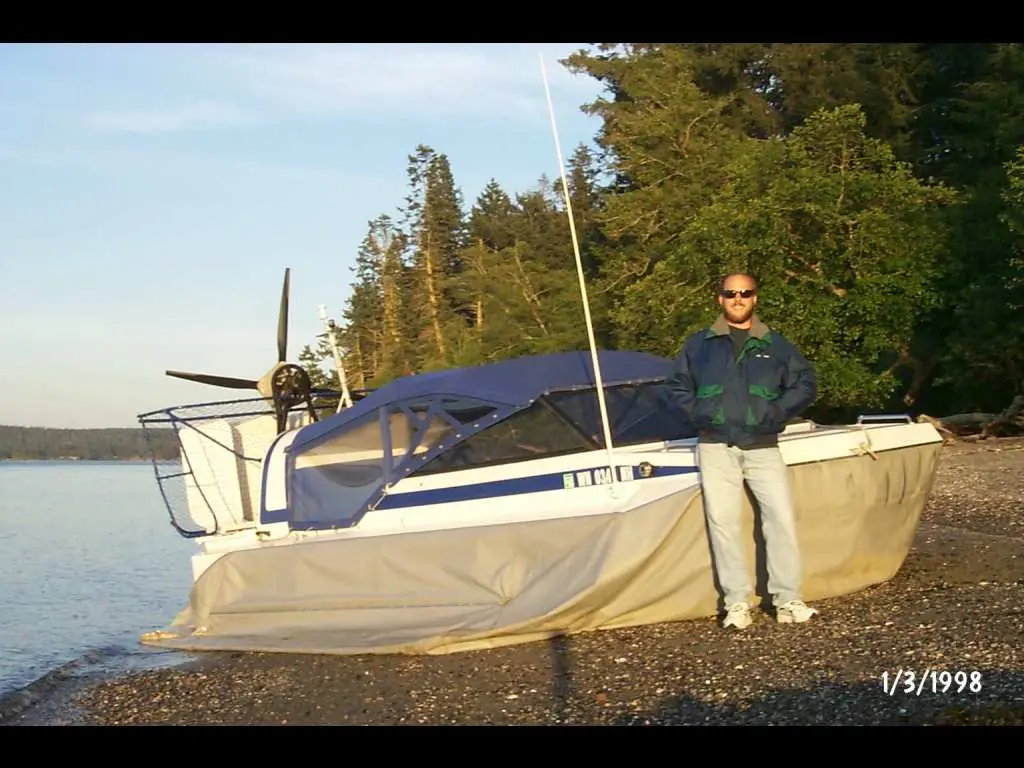
The prototype Explorer 20.
The craft was the prototype Explorer 20, the first one built from the plans Barry Palmer drew. Bryan built it himself. The plans called for a 1.8 liter Subaru. Bryan fitted a brand new 1.4 liter instead, donated by Western Washington University, for his manufacturing engineering senior project: instrumenting the craft’s propulsion system to measure thrust underway.
It was finished in early 1998 and ran about 70 hours of testing that spring before the trip. We left from Anacortes, Washington, where Bryan had his shop at the time.
Loaded, it carried three men, a 40 gallon tank plus a spare can, tools, spares, a skirt repair kit, charts, a video camera, a laptop and far too much food. Barry, acting as loadmaster, added it up to about 1,270 pounds. The Explorer carried it all the way.
- Explorer 20, about 20 feet long, enclosed cabin
- 1.4 liter Subaru, 55 horsepower, for both lift and thrust
- Typical cruise 23 knots, about 26 mph
- 40 gallon tank: up to 375 miles with a reserve
- Two Garmin GPS 38 units, a VHF and two cell phones
- No chase boat, no fuel caches, no float plane support
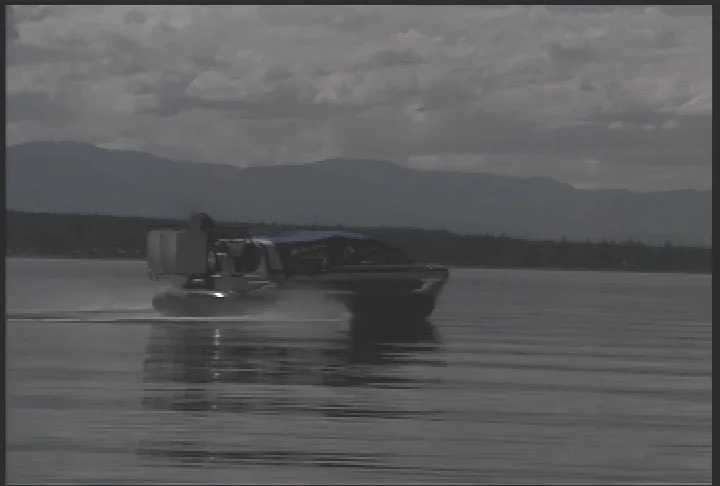
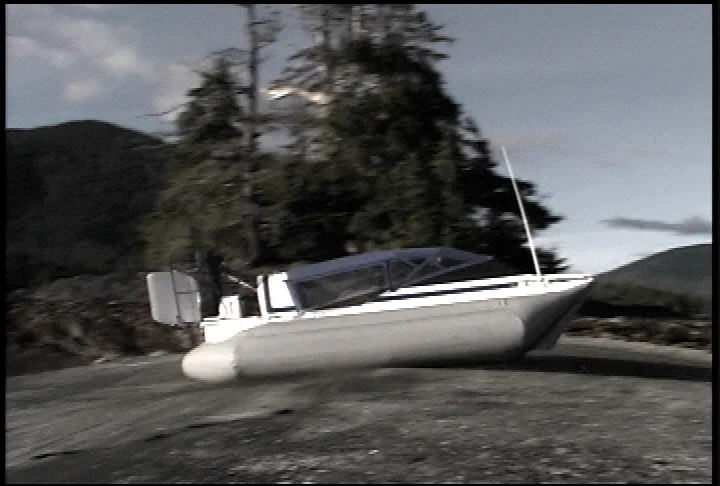
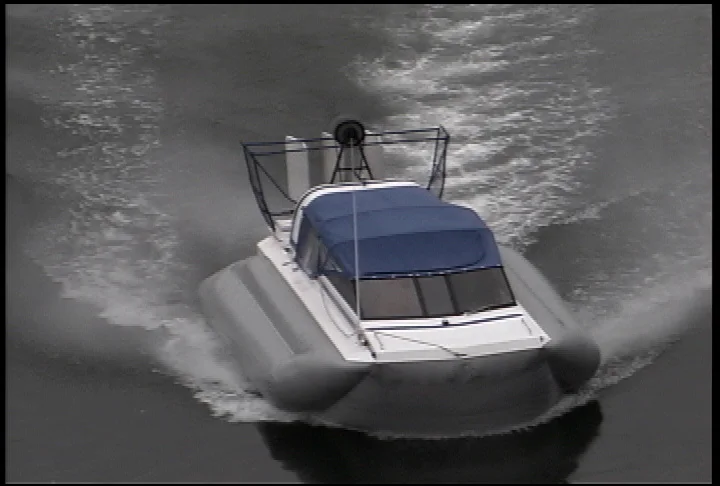
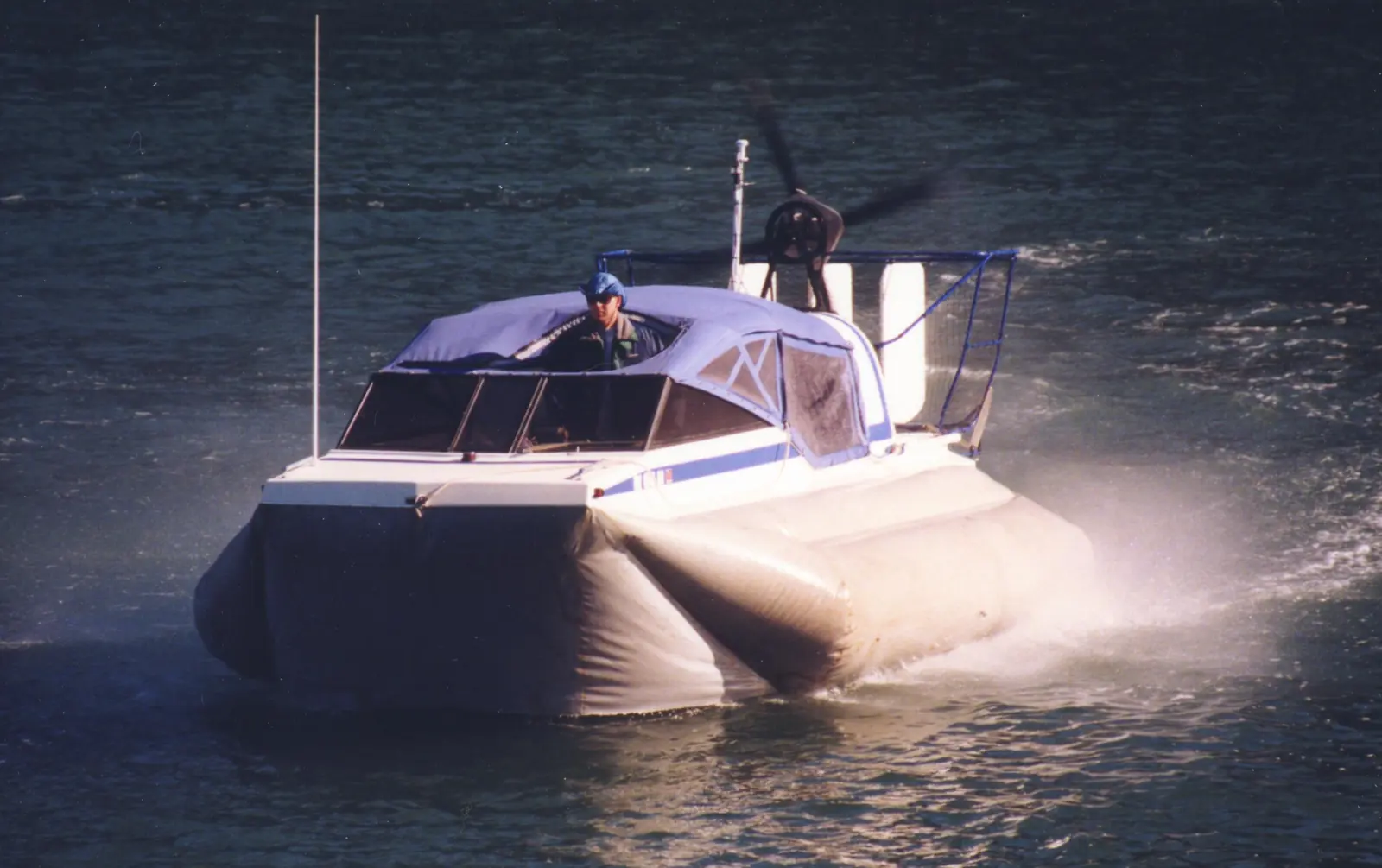
Filmed from a bridge on the trip, from the original 1998 video.
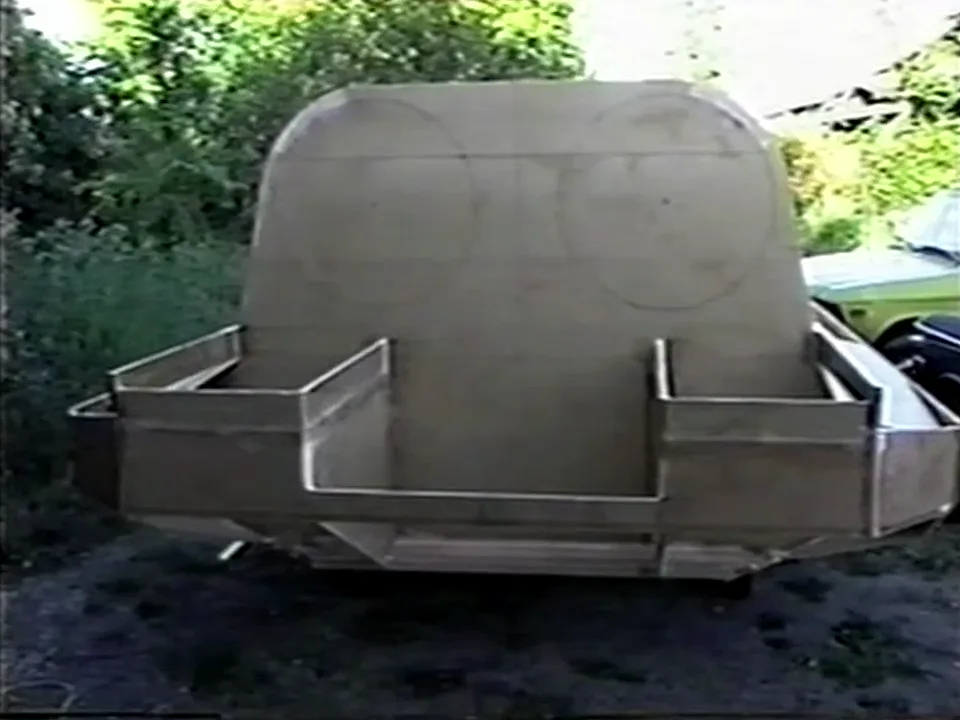
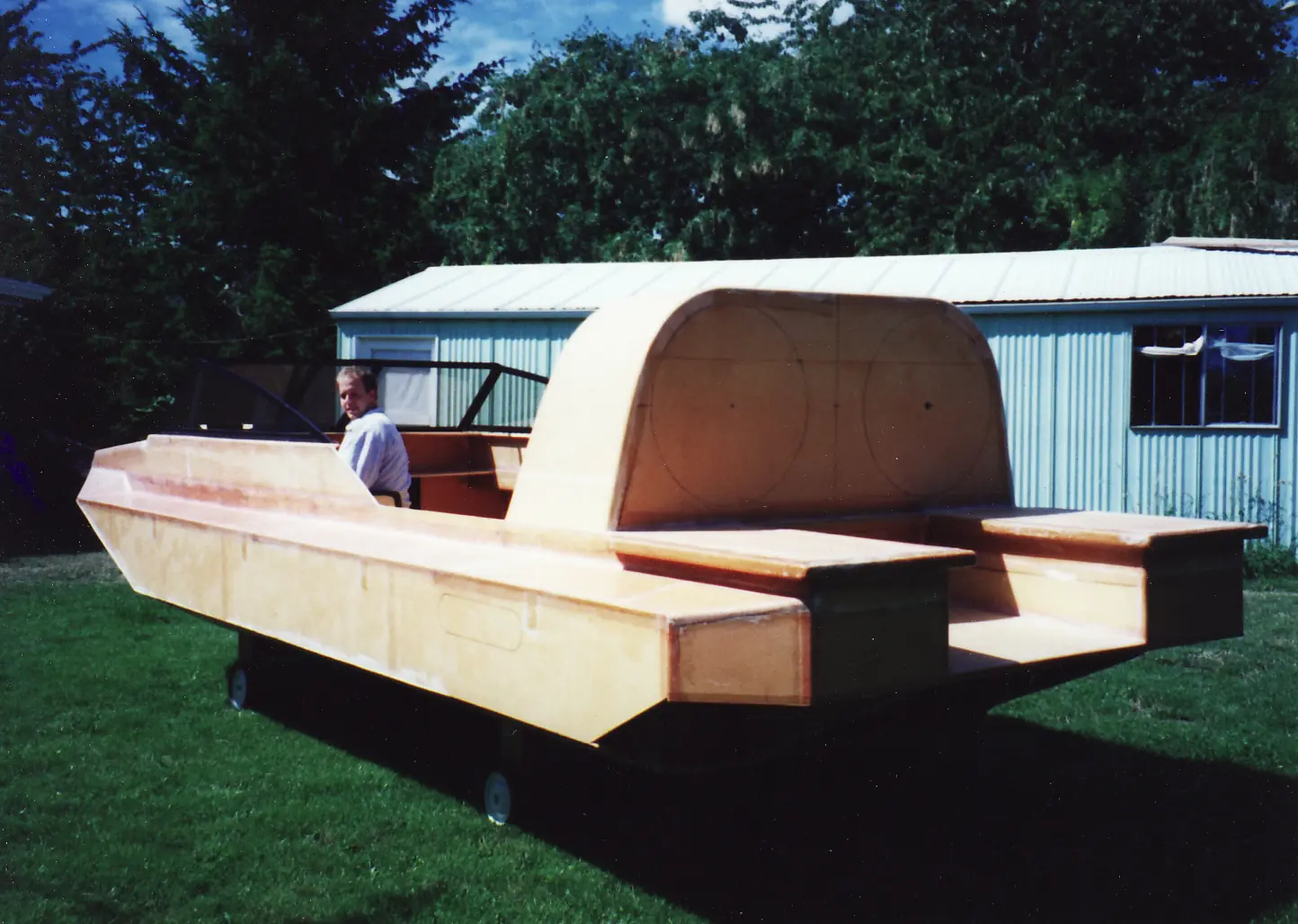
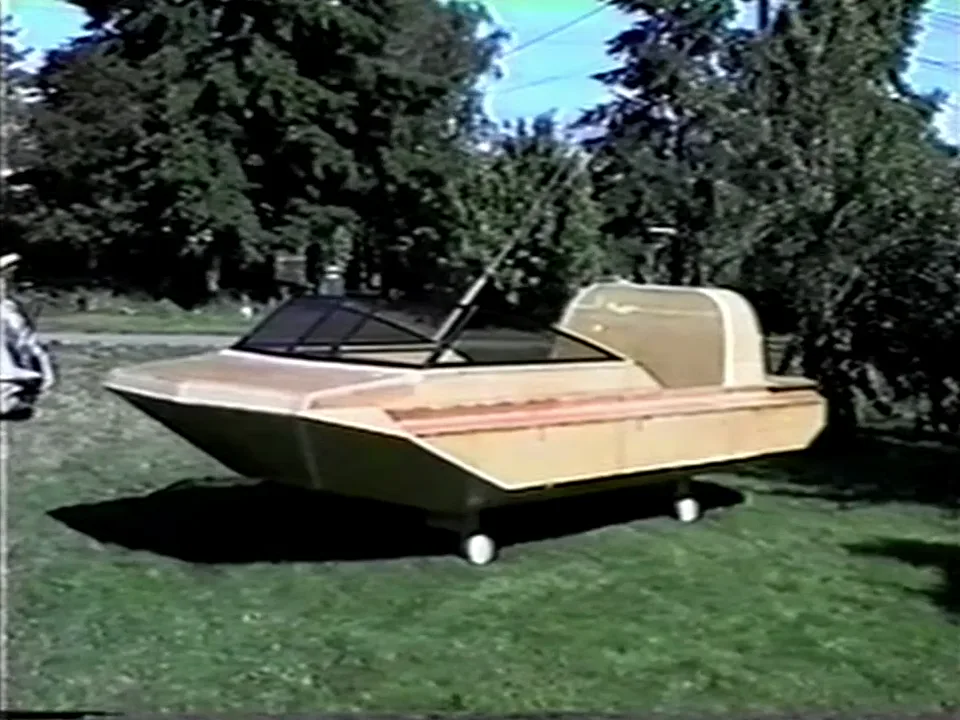
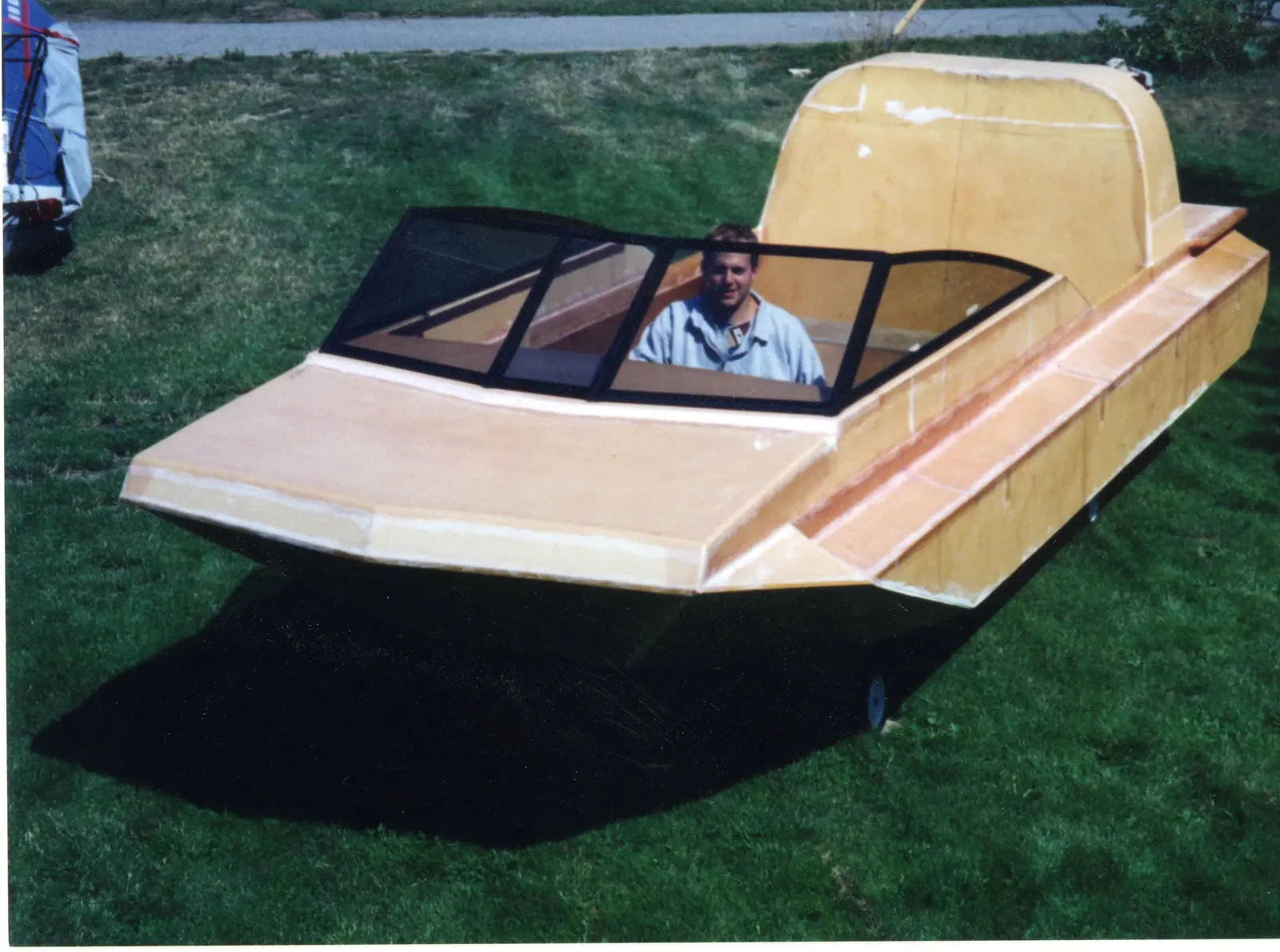
Building the prototype
Built in a rented garage, 1995 to 1998.
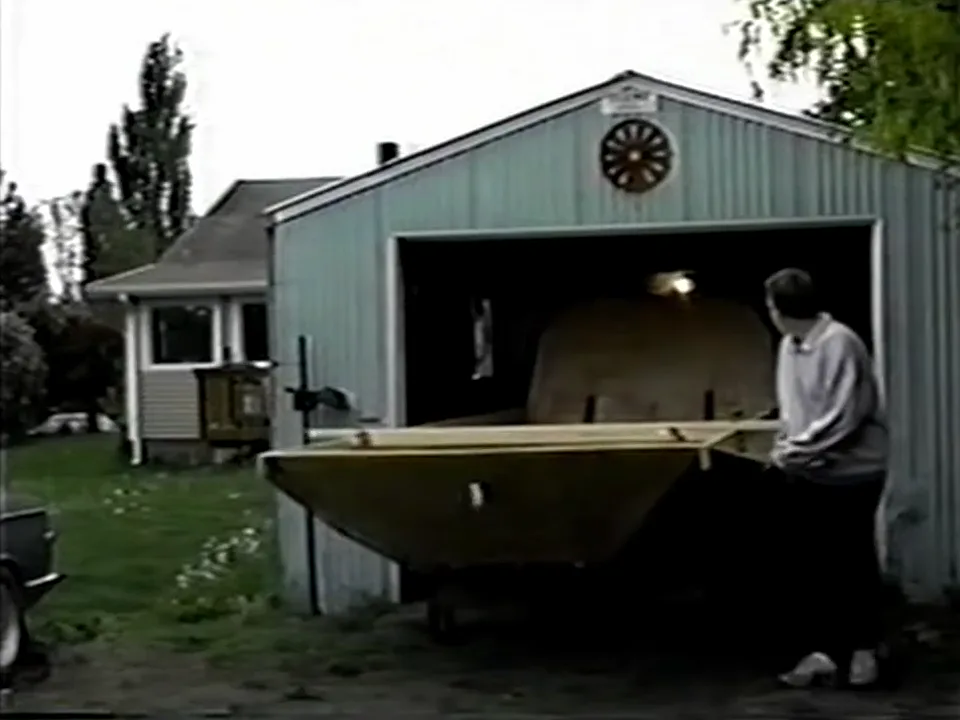
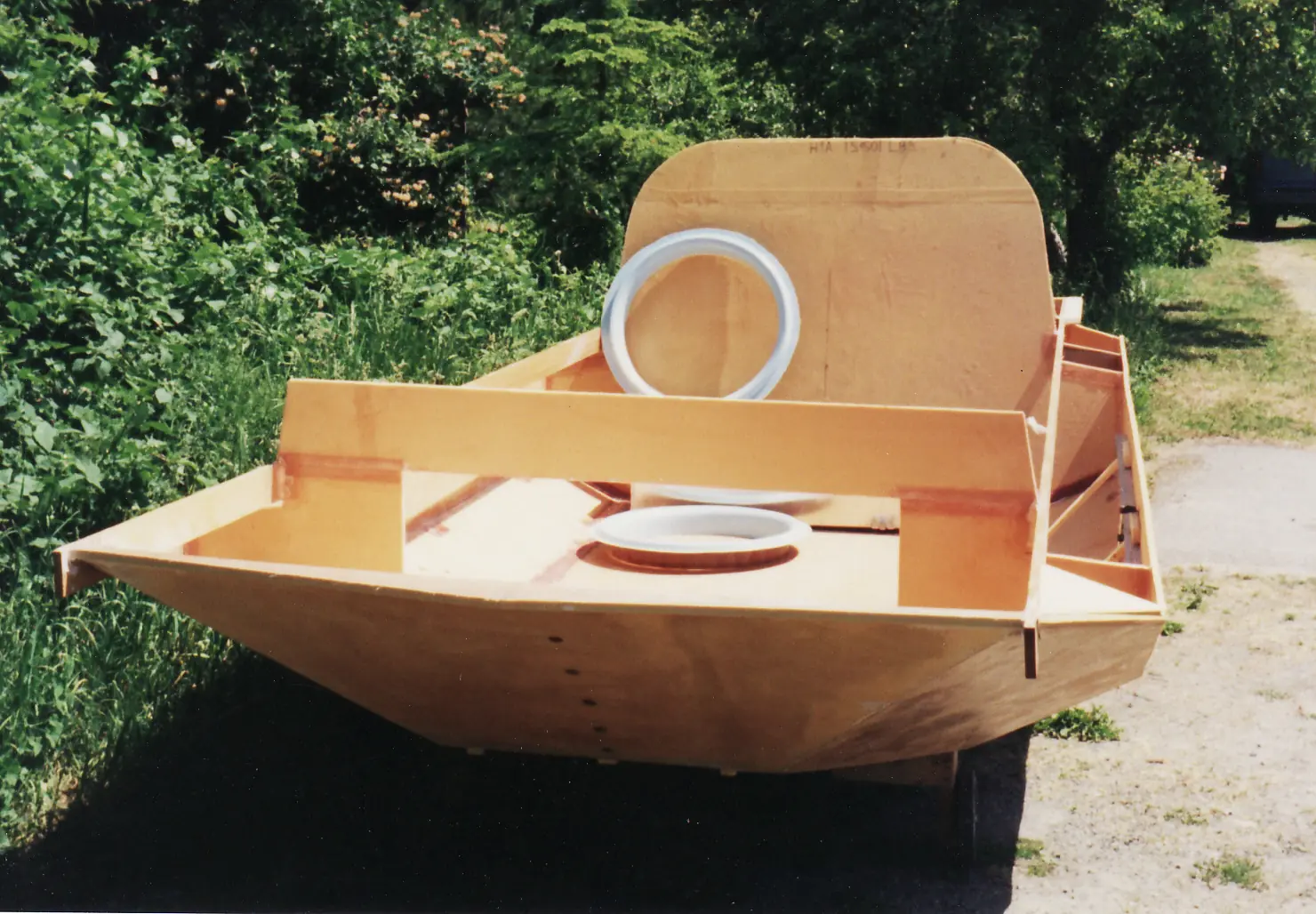
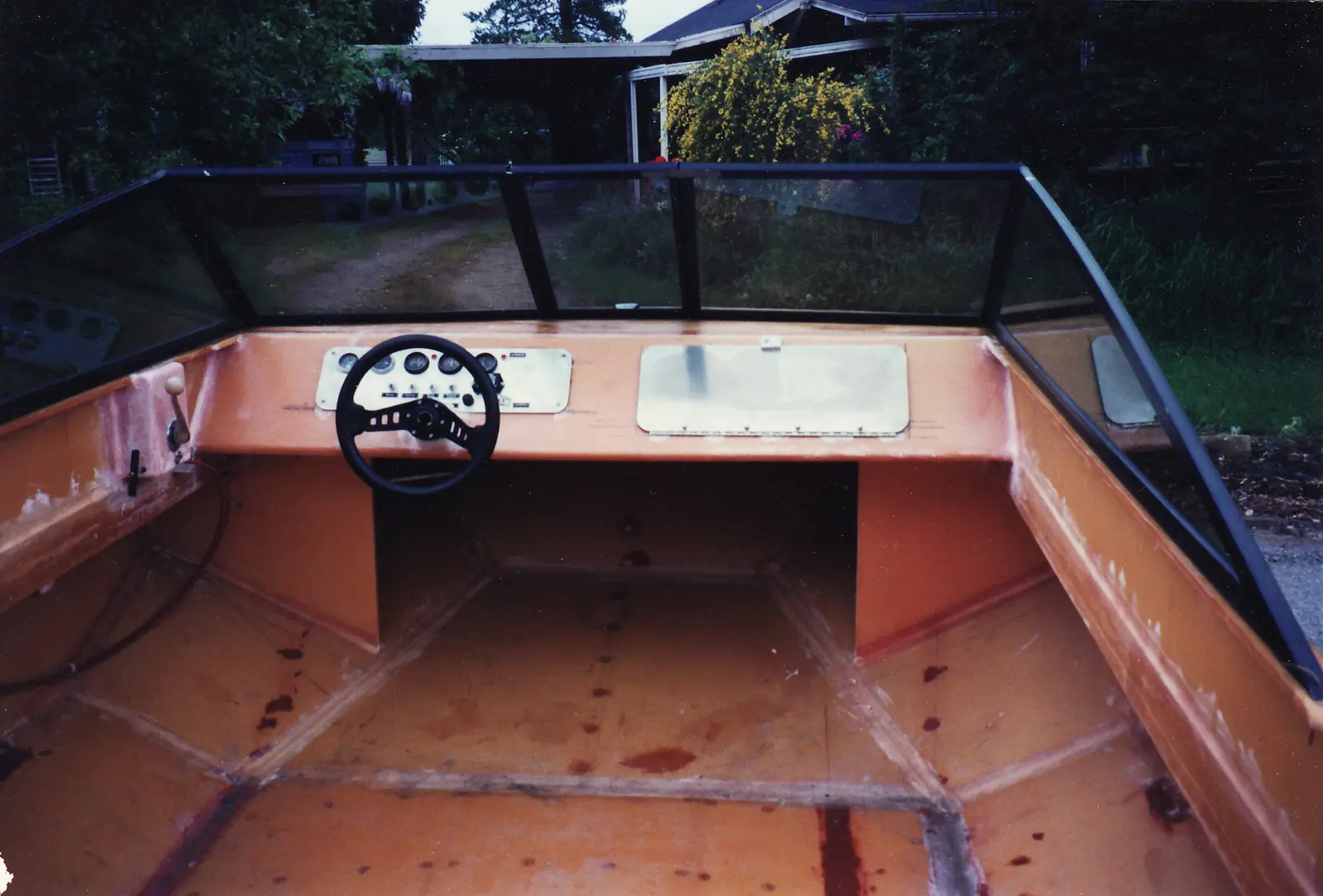
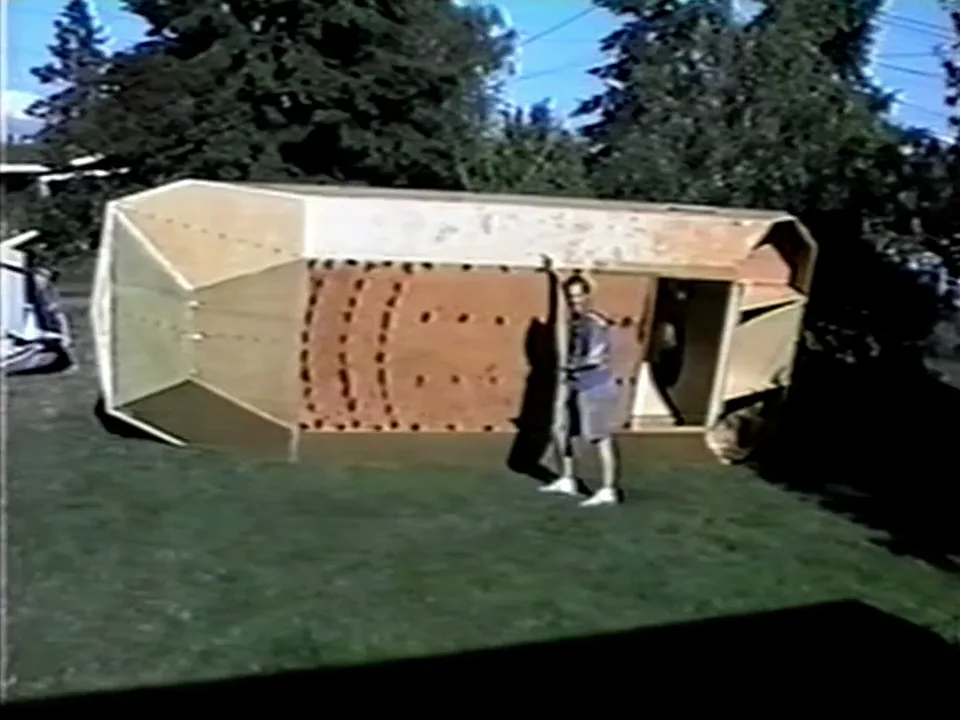
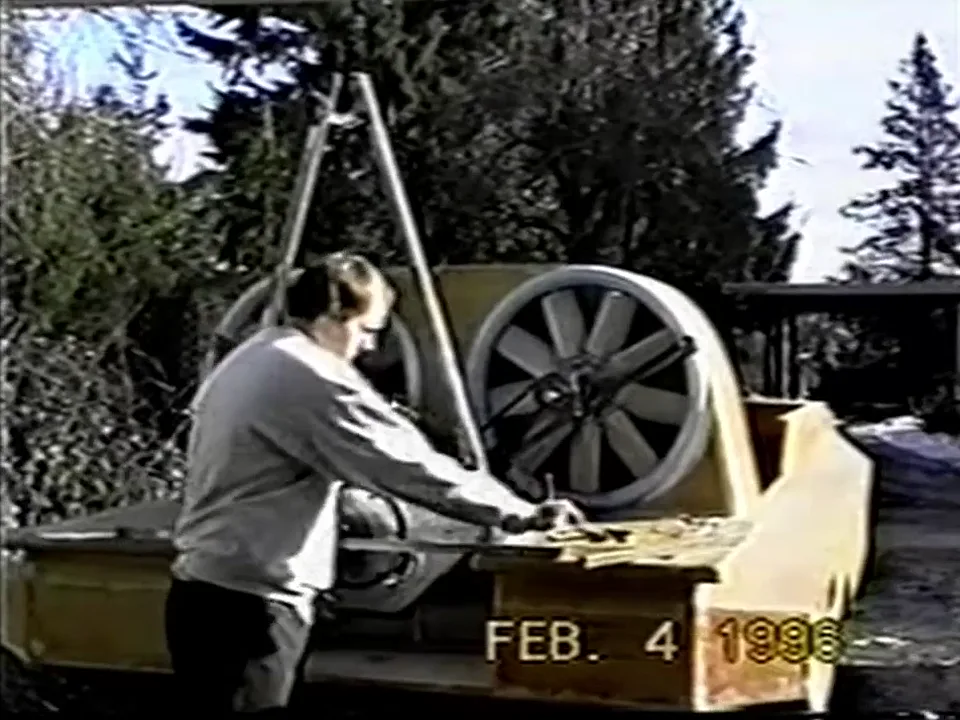
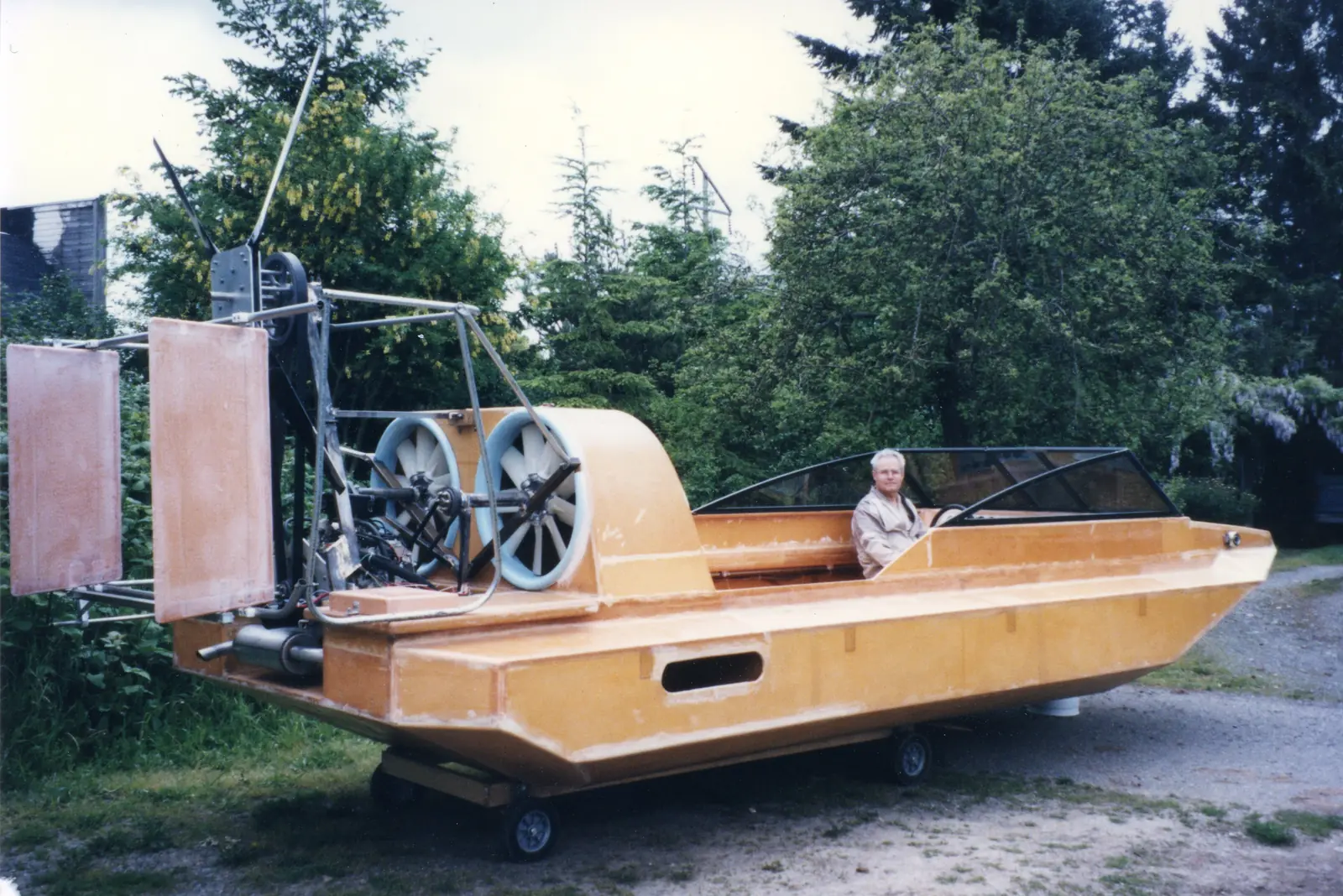
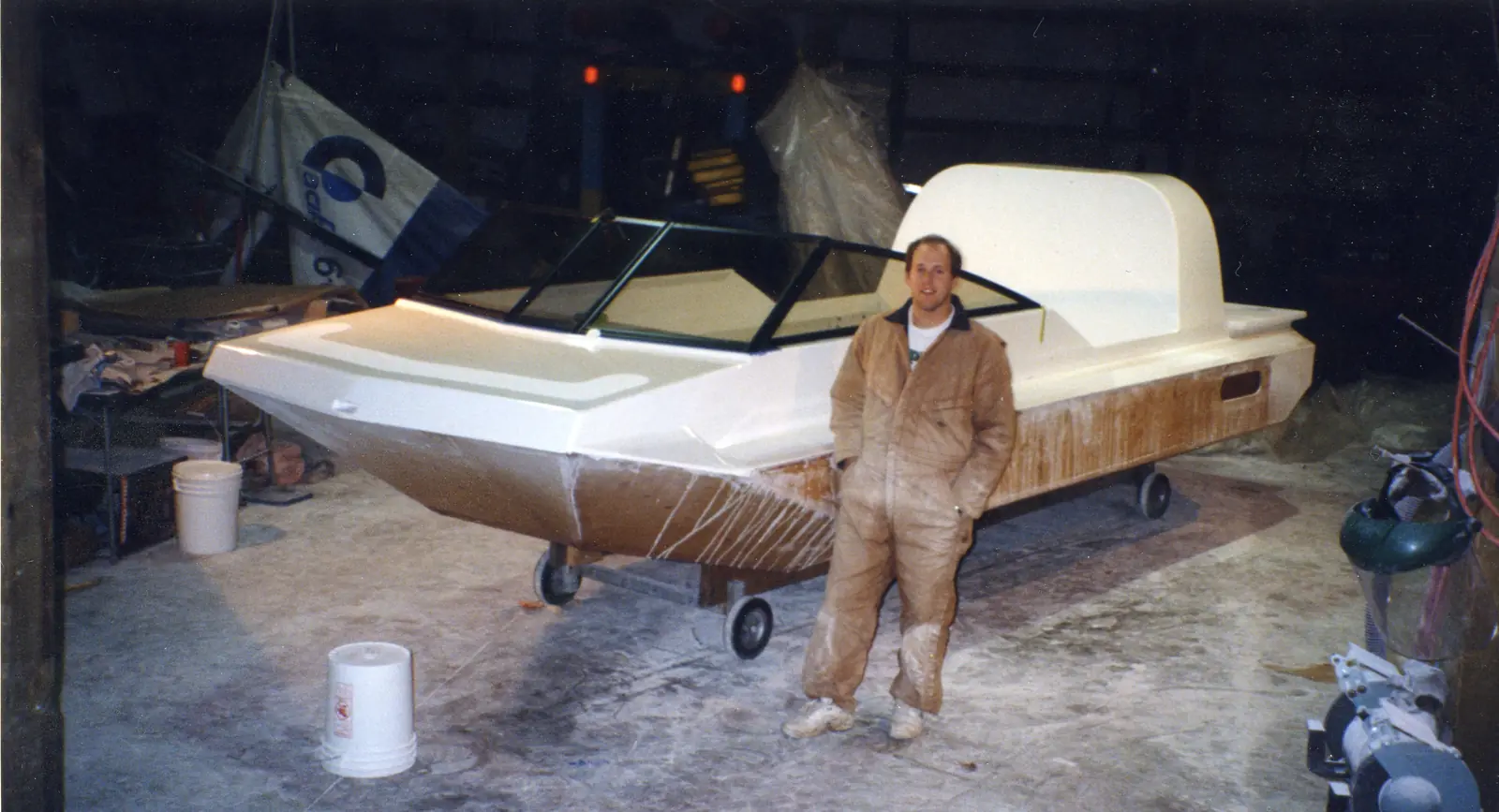
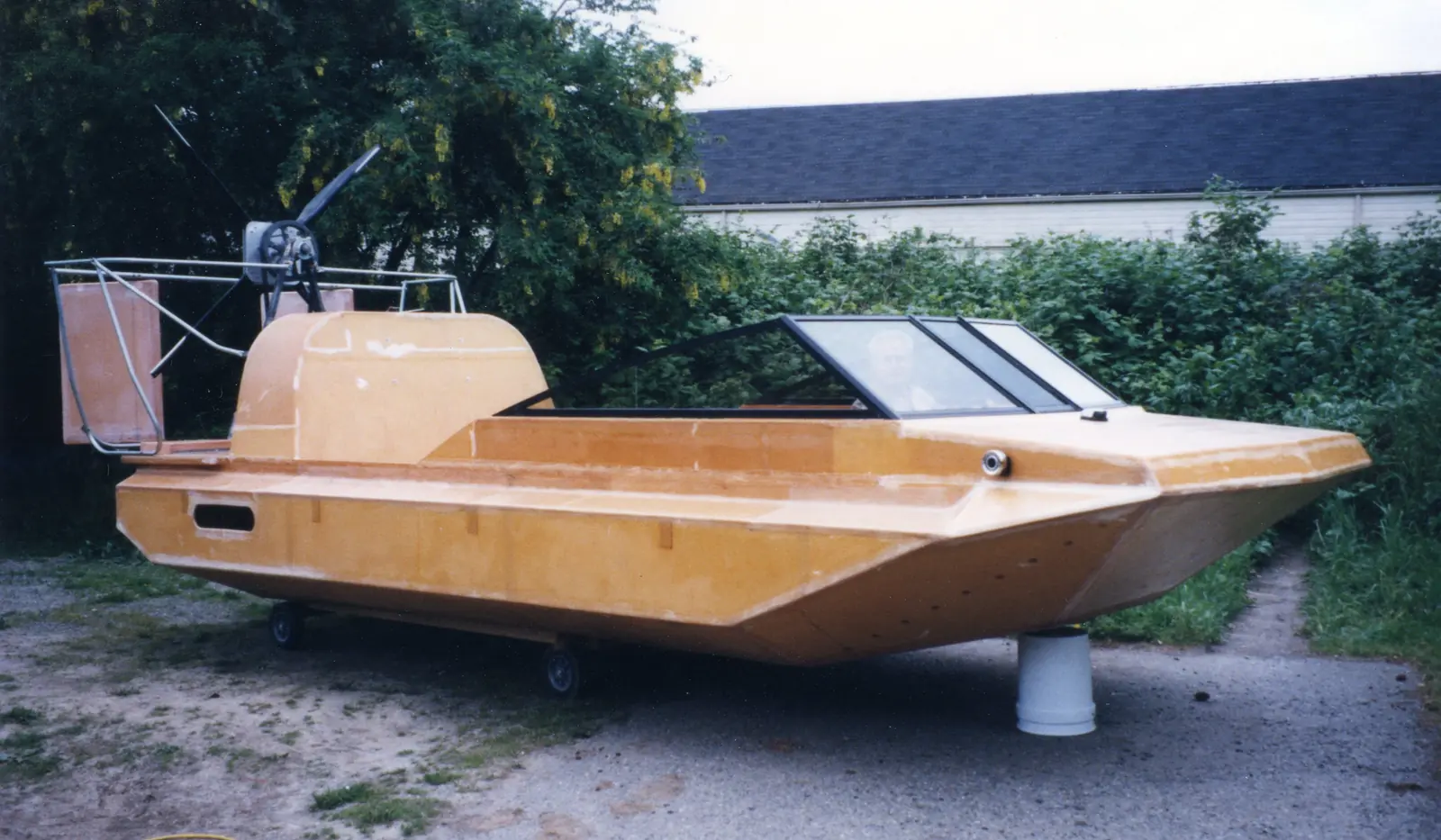
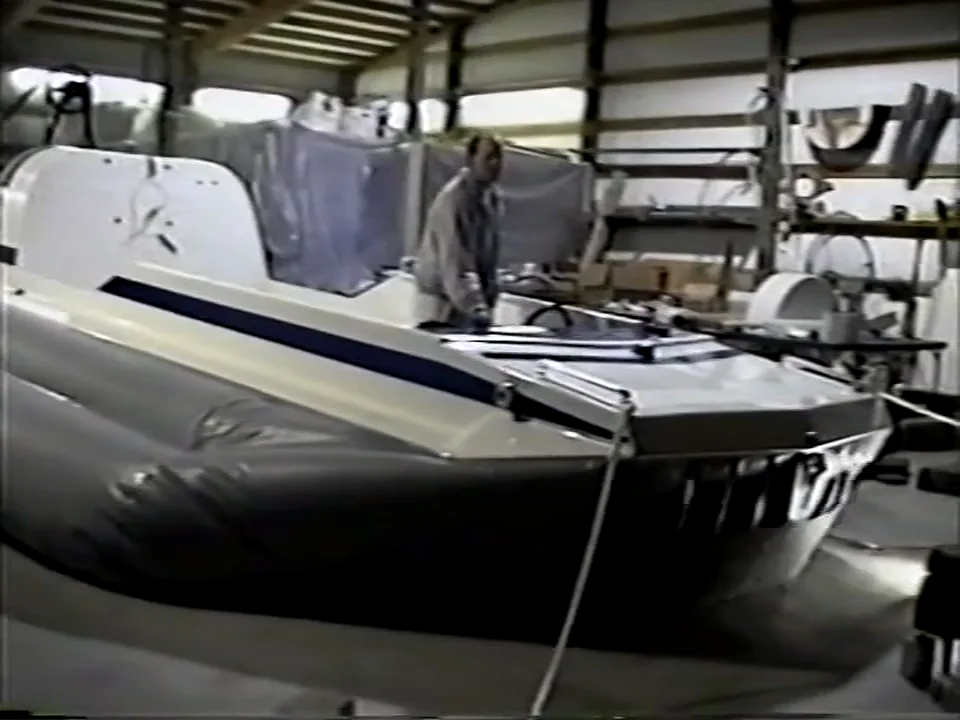
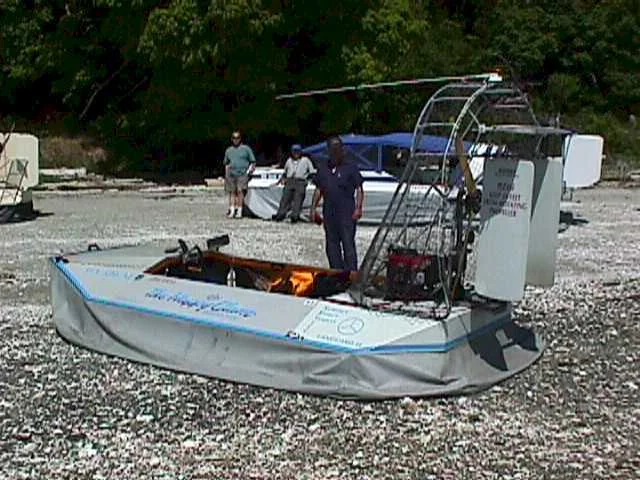
Bryan started the first Explorer 20 in 1995, in a small garage he was renting while studying at Western Washington University. Work paused for our Prospector search and rescue contract, and the craft was finished in early 1998. Most of these pictures are stills from the build video. Use the arrows or pick a photo.
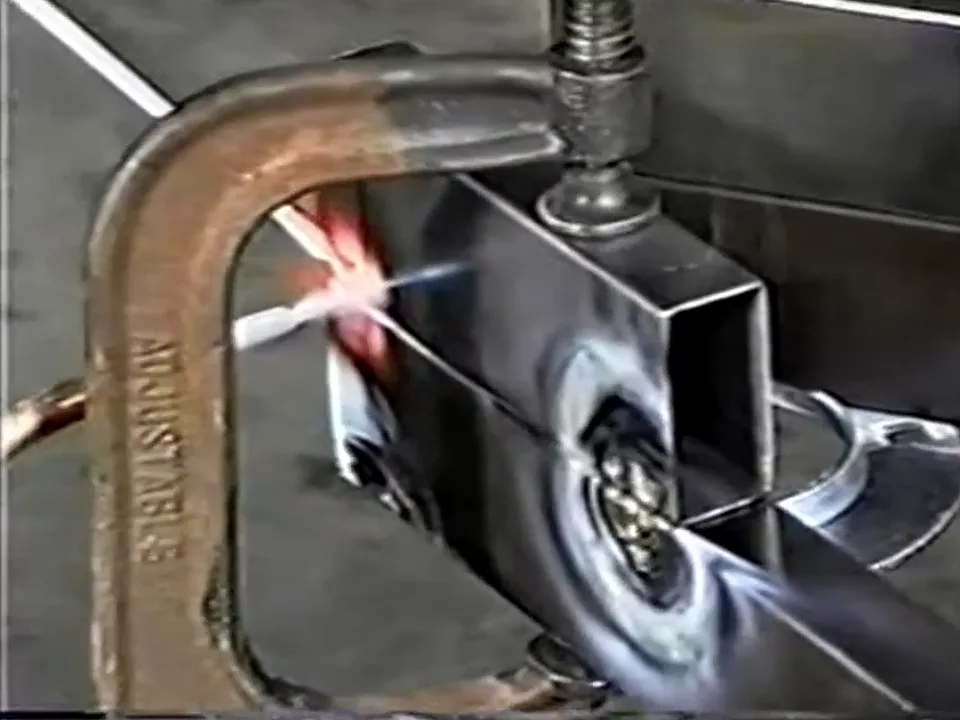
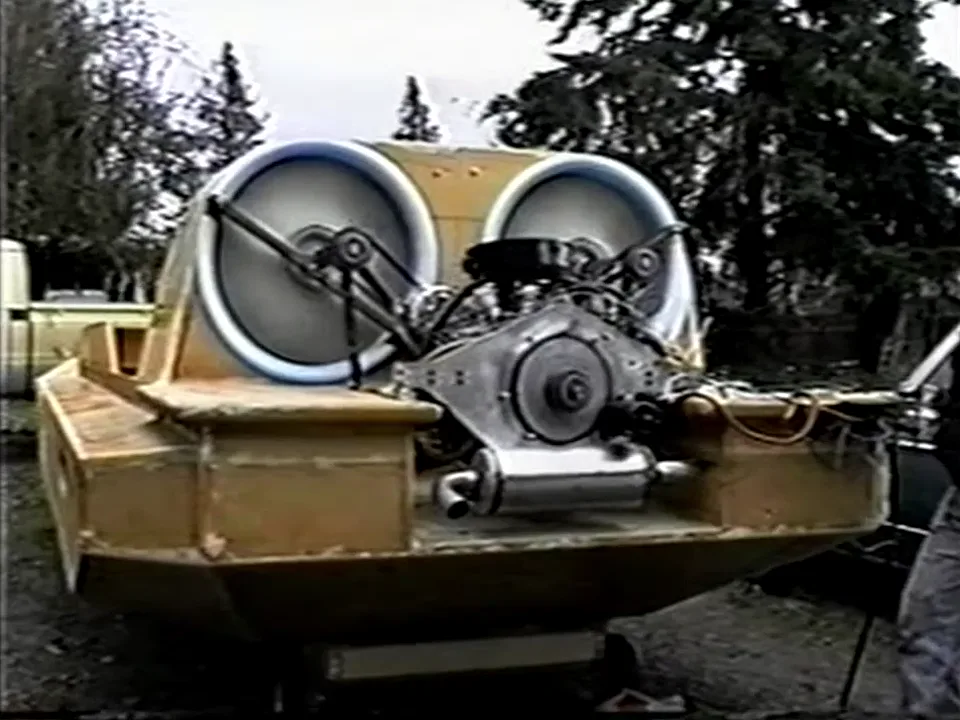
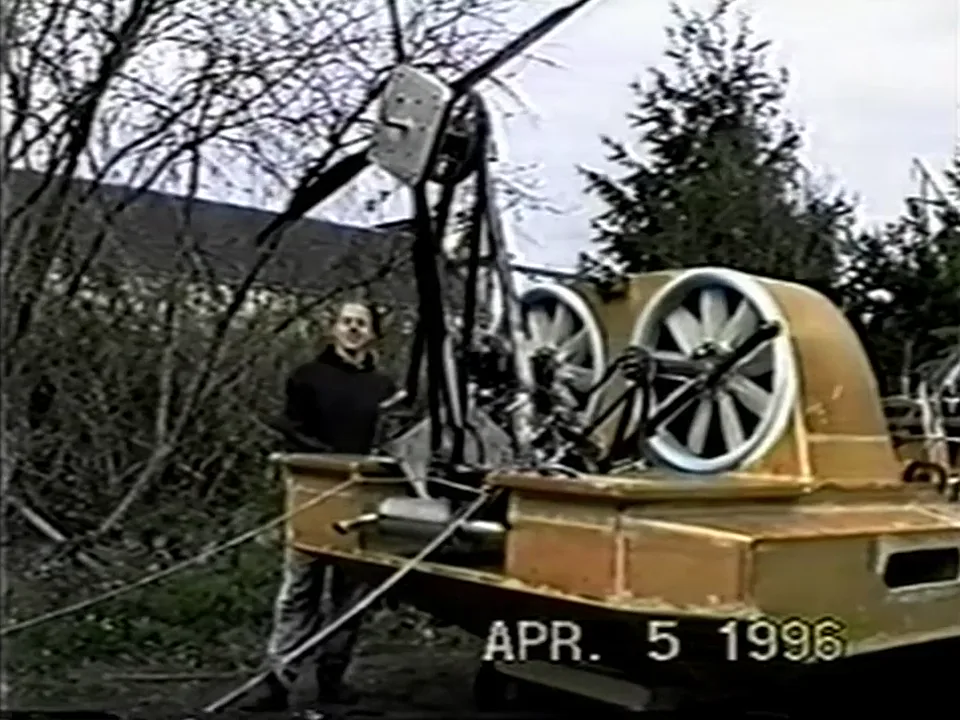
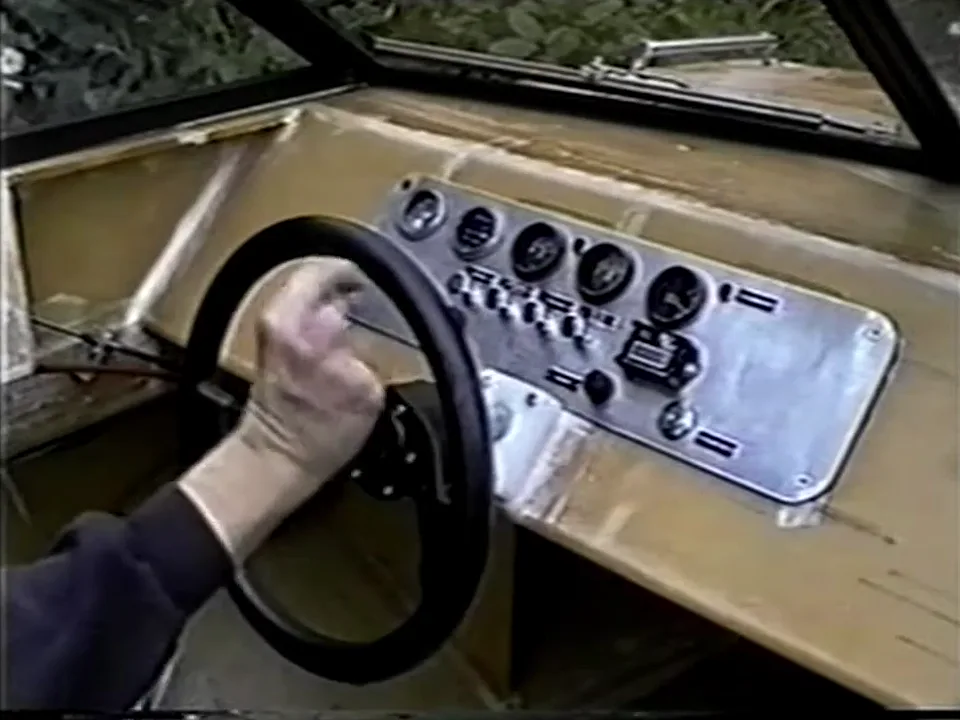
Spring 1998
About 70 hours of testing, then north.
The finished prototype went out for its first runs in the spring of 1998 and logged about 70 hours of testing before the trip.
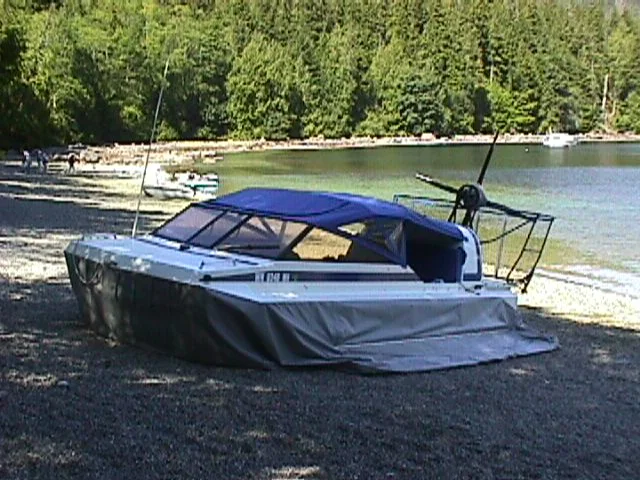
After those first runs, Ward Koeberle, who ran a canvas business in Anacortes, helped Bryan sew his first canvas boat top and passed on the tricks he had learned from years of work. That is the blue top you see in the trip photos, and the skill went on to make many more tops for clients over the years.
Then we loaded it at Bryan’s shop in Anacortes and left from the north end of the Swinomish Channel.
One of the first runs on a lake, spring 1998.
Leg by leg: days 1 to 3
Anacortes, the San Juans and the Gulf Islands.
The story comes from Barry Palmer’s account of the trip and John Carter’s daily blog, posted from the road in 1998.
We left the north end of the Swinomish Channel at 3 pm, into a headwind. Dave Crawford ran the first leg alongside in his well loaded 20 hp Vanguard. We crossed the San Juan Islands, cleared Canadian customs at Bedwell Harbour and spent the first night on the beach at Protection Island, near Nanaimo.
Next came lunch at Sandy Island with Wolf and Gloria Rautenburg of Comox, BC. Wolf built the Model A, the twin propeller craft with a blue canvas top that came before the Explorer, and they met us in it. Then on to Desolation Sound and Stuart Island. When the wind came up we pulled onto the beach at Forward Harbor to wait out Johnstone Strait, and slept aboard.
Dave Crawford’s 20 hp Vanguard running alongside on the first leg, from the 1998 video.
Wolf Rautenburg’s twin propeller Model A, the craft that came before the Explorer, at Sandy Island.
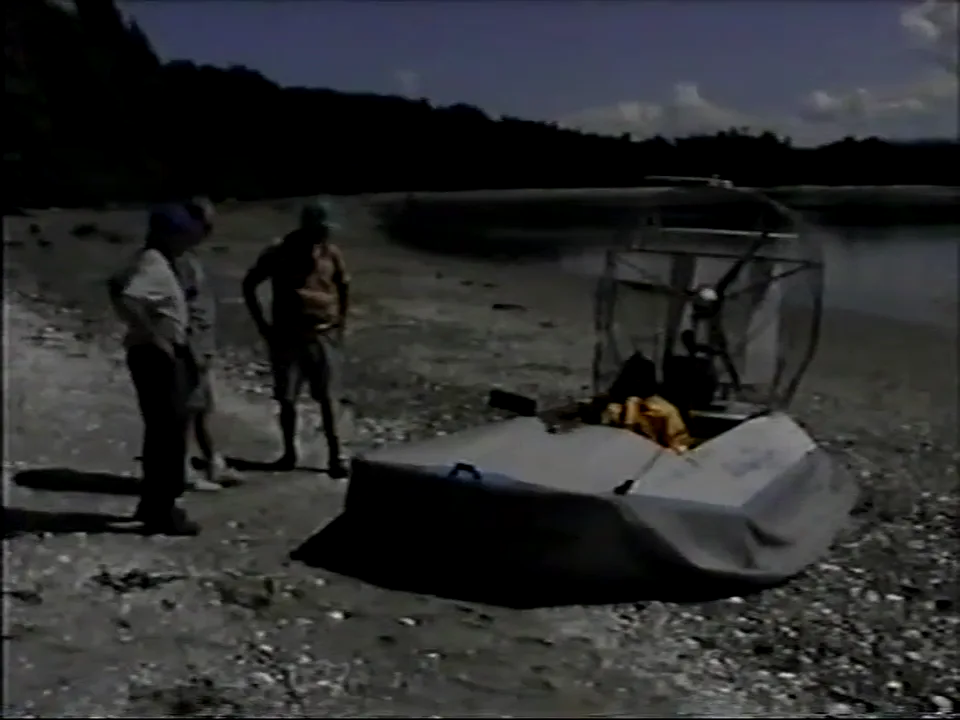
Onboard under the Pender Island bridge.
Days 4 to 6
Four tries at Cape Caution.
Cape Caution is one of two places on the route open to the full fetch of the Pacific. The first look, out Slingsby Channel, found an ebb tide piling the ocean swell into breaking waves. The next morning one sea about 3 meters high turned us around. The morning after that, fog, rain and steamed up windows turned us back again.
That evening a sailboat ducked into the anchorage. Amy and Tim Whelan, on their 32 foot cutter, were headed the same way, and their weather report helped us pick our day. On the fourth try we rounded Cape Caution in 4 foot seas and ran on to Bella Bella and Shearwater.
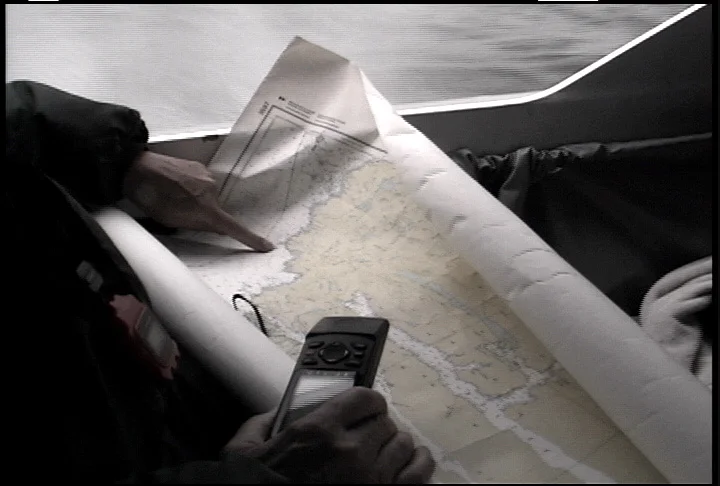
Barry points out Cape Caution. Photo: John Carter.
Days 7 to 9
Prince Rupert, Dixon Entrance and into Alaska.
The run to Prince Rupert was the longest of the trip, more than 200 nautical miles, with a stop at a hot spring along the way. Through the long, straight Grenville Channel the Explorer ran above 30 knots.
From Prince Rupert we sealed a few windshield leaks and crossed Dixon Entrance, open ocean again, back into United States waters. Approaching Ketchikan we ran straight over a gillnet. A hovercraft does no harm to a net, but a few fishermen let us know what they thought.
Ketchikan was more than 700 nautical miles from the start. Barry caught the ferry home to Bellingham from there, and Bryan and John carried on.
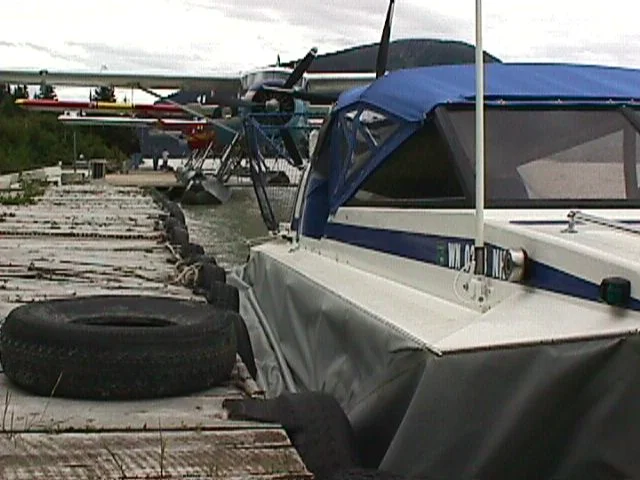
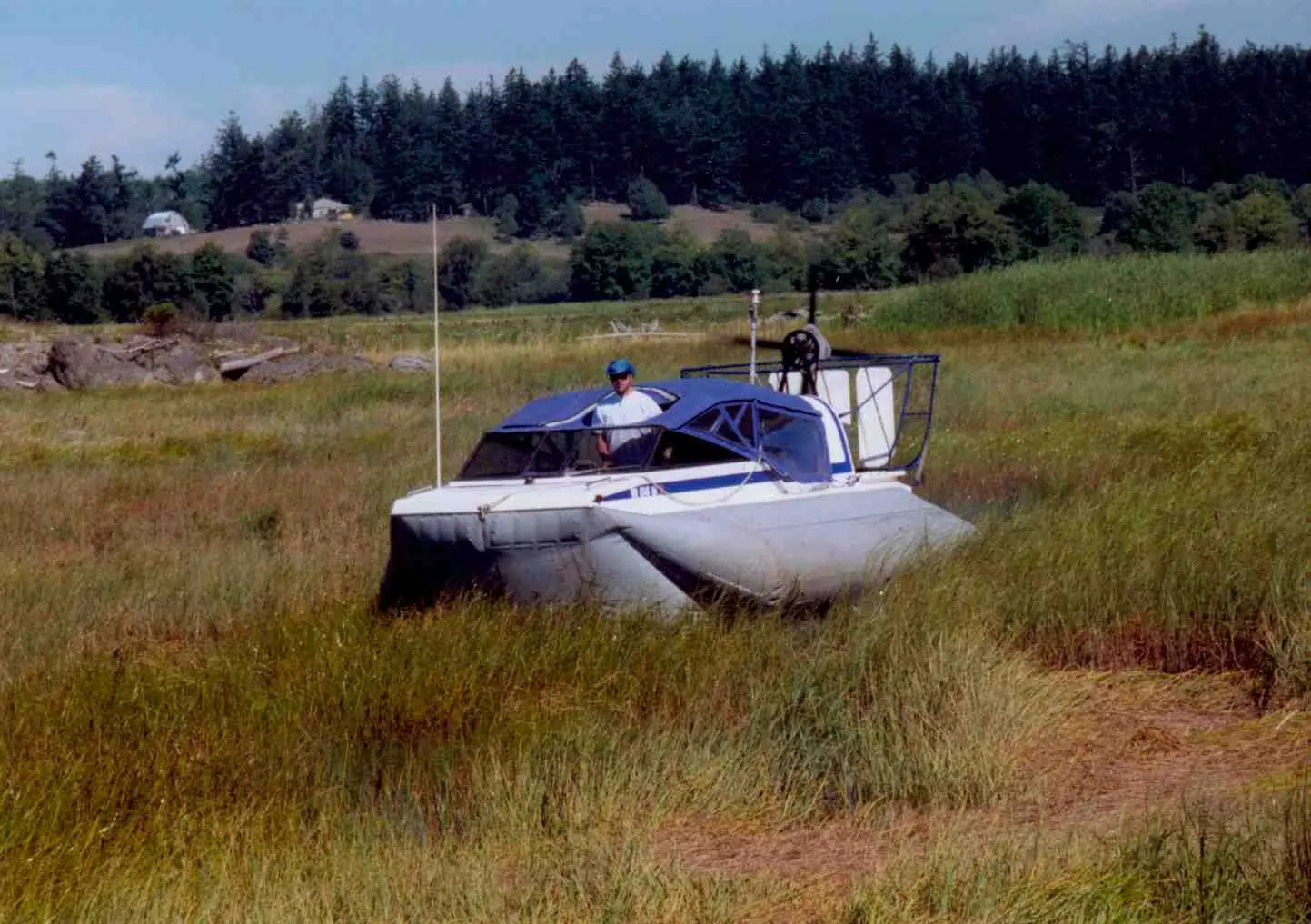
Pulling up onto shore. Any beach is a dry dock for a hovercraft.
Days 9 to 12
Anan Creek, Wrangell and the Stikine River.
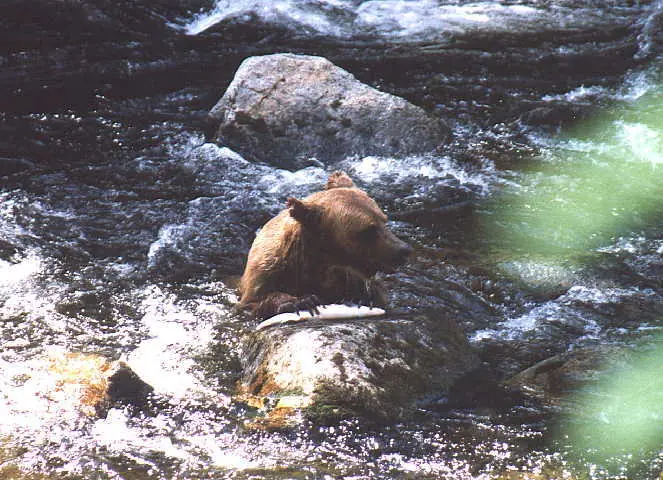
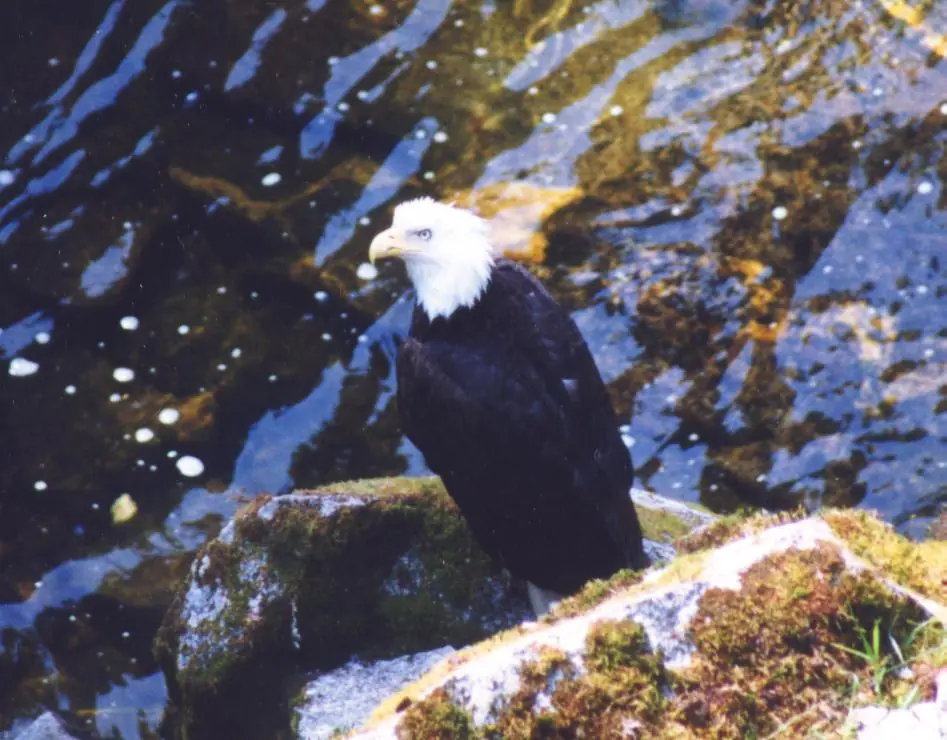
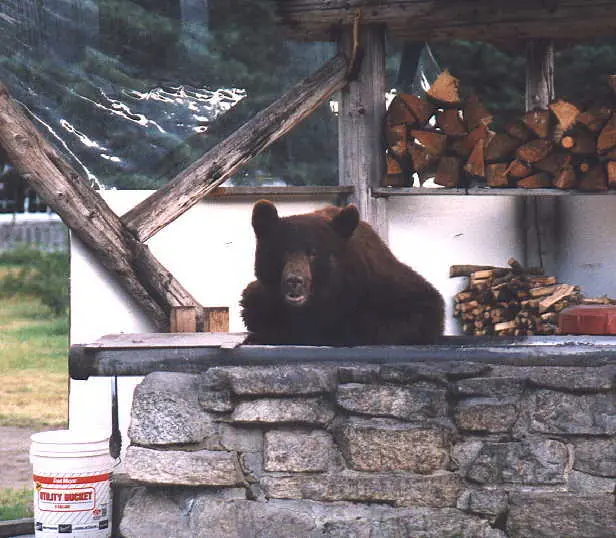
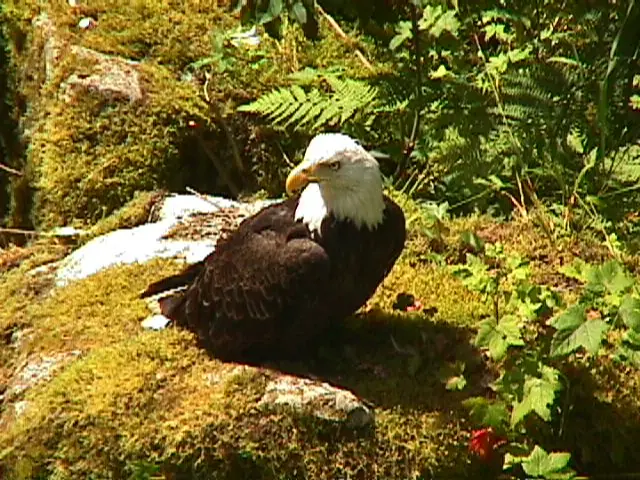
Between Ketchikan and Wrangell the cruising guide pointed to the Anan Creek bear observatory. We anchored, rowed ashore in a Forest Service skiff and hiked up to the falls, where a brown bear named Luna and a black bear fished for salmon under a sky full of bald eagles.
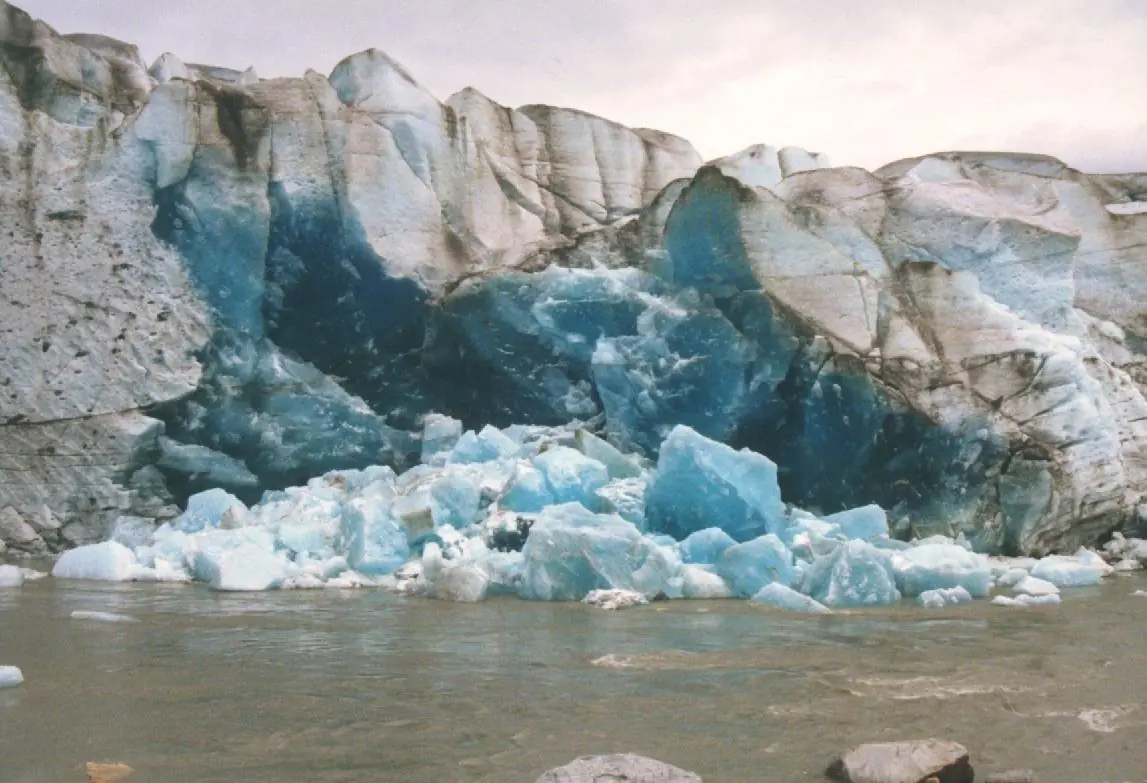
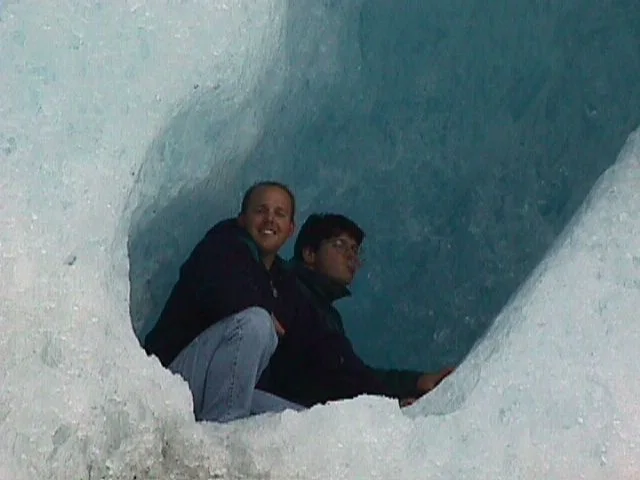
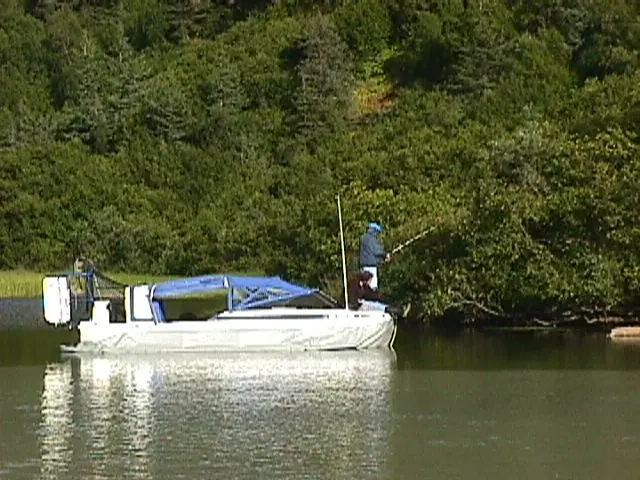
From Wrangell we ran 15 miles up the Stikine River to a Forest Service cabin in Shakes Slough, soaked in a hot spring, and came home after dark when both GPS units quit at once. The next day we threaded icebergs on Shakes Lake below the Shakes Glacier, then ran up Wrangell Narrows to Petersburg.
A bear catching a salmon at the falls, from the original 1998 video.
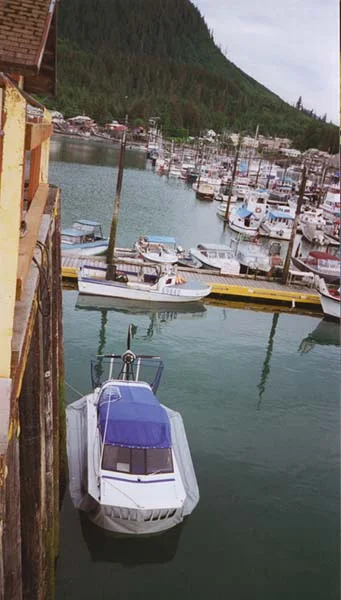
Leaving a southeast Alaska harbour, from the 1998 video.
“Bucking the wind driven seas and navigating through the twilight, we finally made it into Juneau at 2330.”
John Carter, day 13, from the 1998 trip blog
Juneau and the Taku
The first hovercraft at Taku Lodge.
The last leg ran from Petersburg up Stephens Passage in rain and fog, into 3 to 4 foot seas as the light went. We tied up in Juneau at 11:30 at night on day 13.
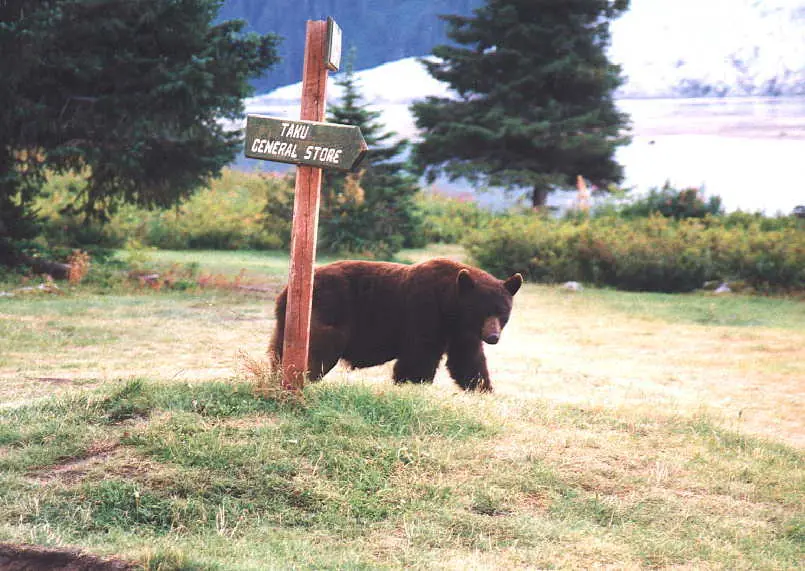
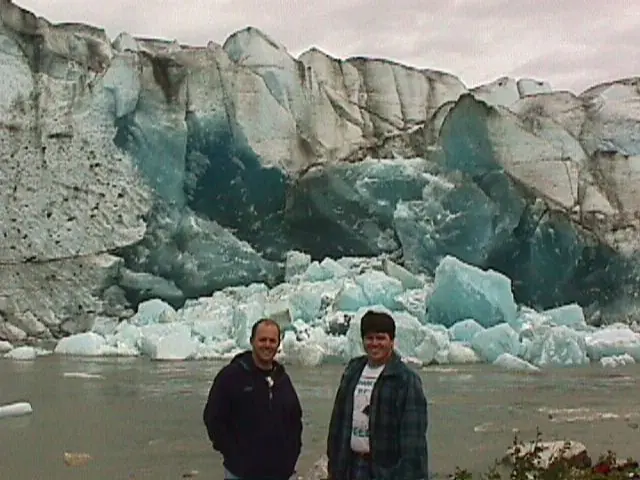
From Juneau we ran up the Taku River to the Taku Glacier, five miles wide at its face. Taku Lodge, where every other guest arrives by float plane, had never had a hovercraft visit, and they fed us salmon for lunch and dinner. We ran up small, fast rivers to Norris and Wright Glaciers, and met Scarface, the lodge’s resident black bear.
Passing the ice face of Norris Glacier.
The crew
Three men and a lot of gear.
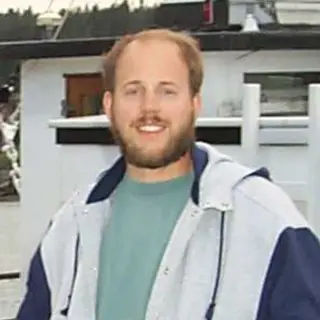
Bryan Phillips
Captain and builder
Built the prototype Explorer 20 from Barry’s plans and drove most of the way. Today he designs and builds every Amphibious Marine hovercraft.

Barry Palmer
Designer and navigator
Designed the Explorer, kept the load in check and wrote his own account of the trip. He left at Ketchikan to get back to work.
John Carter
Video, photos and blog
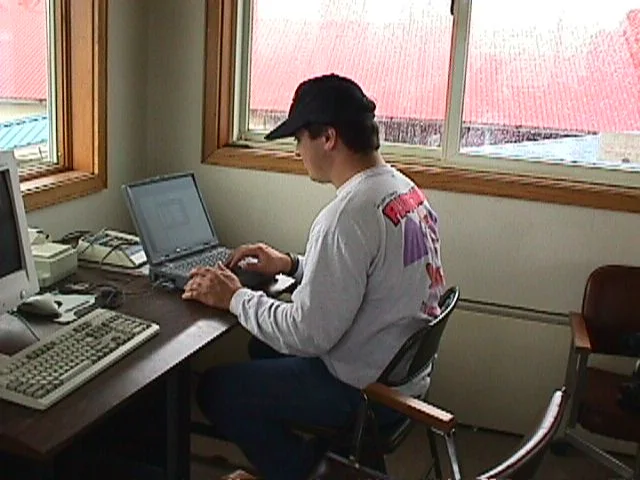
Recently retired from the Navy, where he served on nuclear submarines, and a builder of several hovercraft himself. John shot the video and stills and kept the trip blog going from marinas and harbor offices over a dial up modem.
Dave Crawford ran the first leg in his Vanguard, and friends along the way gave us beaches, floats, dinners and local knowledge. Most of the stills on this page are John’s, from his original 1998 trip blog on hovernut.com.
Photo gallery
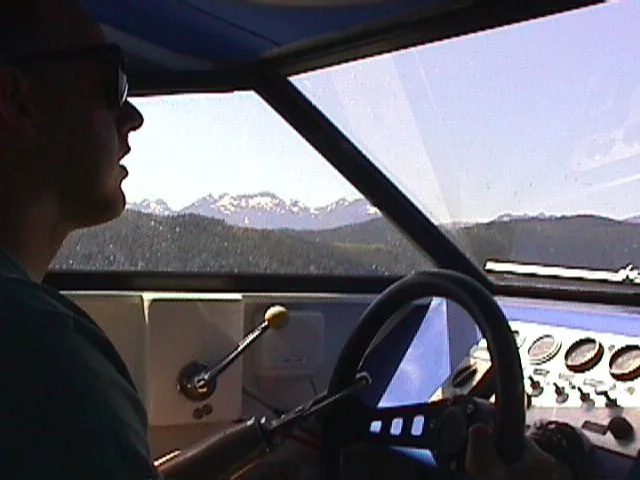
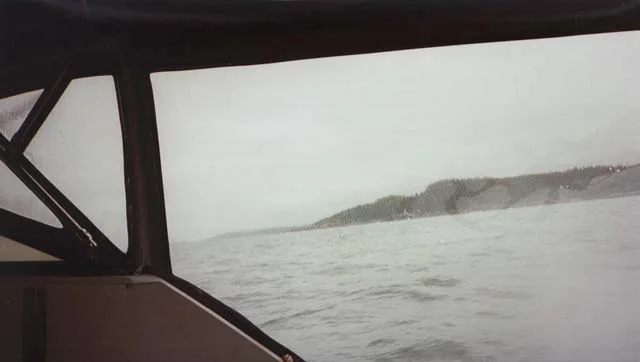
The trip in pictures.
What it proved
No repairs, and a lesson about size.
It was the first time a hovercraft had run the length of the Inside Passage, and no other hovercraft has repeated it since. In Barry’s words, the Explorer performed flawlessly, with no repairs needed. The windshield leaked and the skirt got some routine attention on the beaches, and that was all.
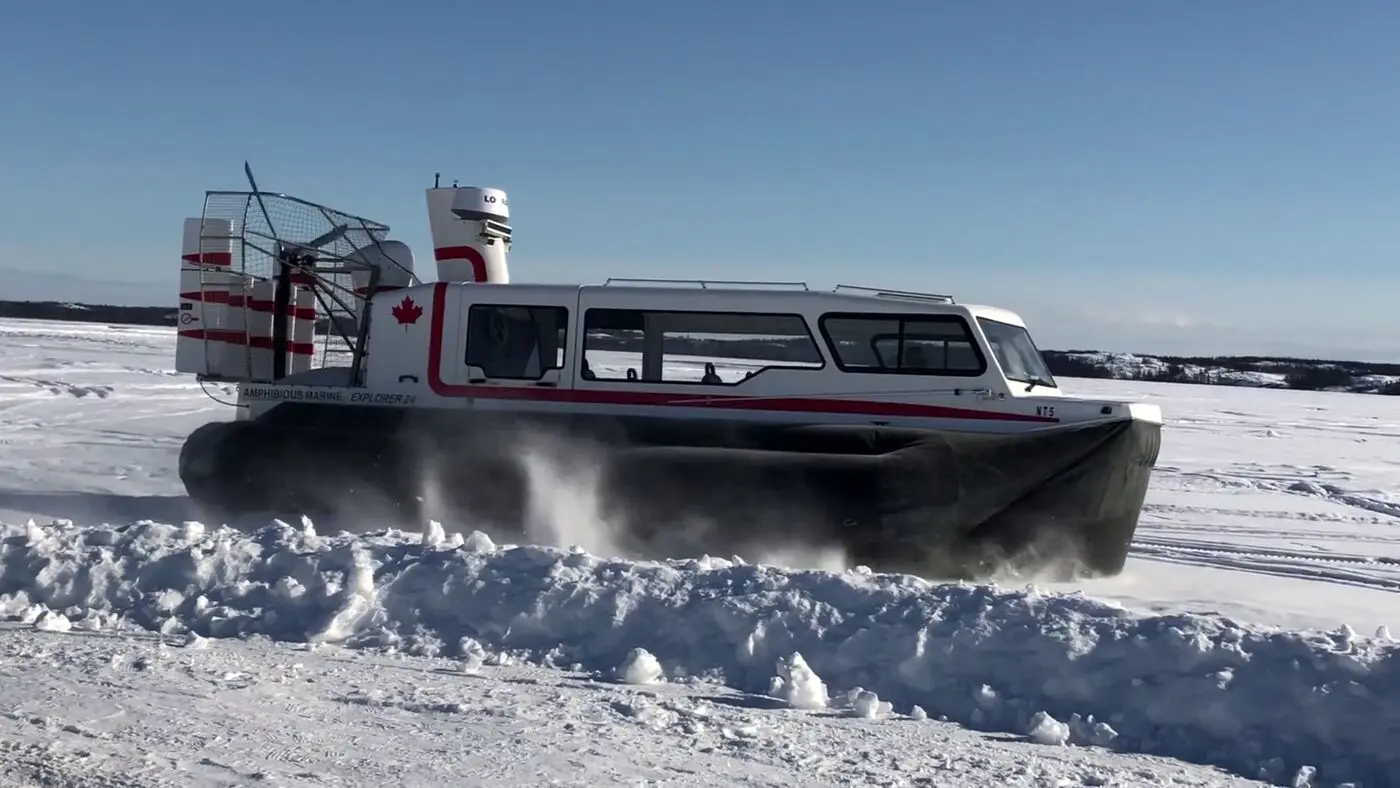
His other conclusion was just as clear: to make a trip like this in comfort you want a bigger craft, 25 to 30 feet. That thinking led to the Explorer 22 and today’s Explorer 24, with an enclosed cabin for twelve and a Steyr diesel. Back home, the Explorer 20 went to work giving tourist rides out of La Conner.
A hard turn at speed in 1998.
Alaska and remote access
Planning your own long run?
Tell us the route, the distance and what you need to carry. We have been doing this since 1998.